Articles
Muhamad yehia
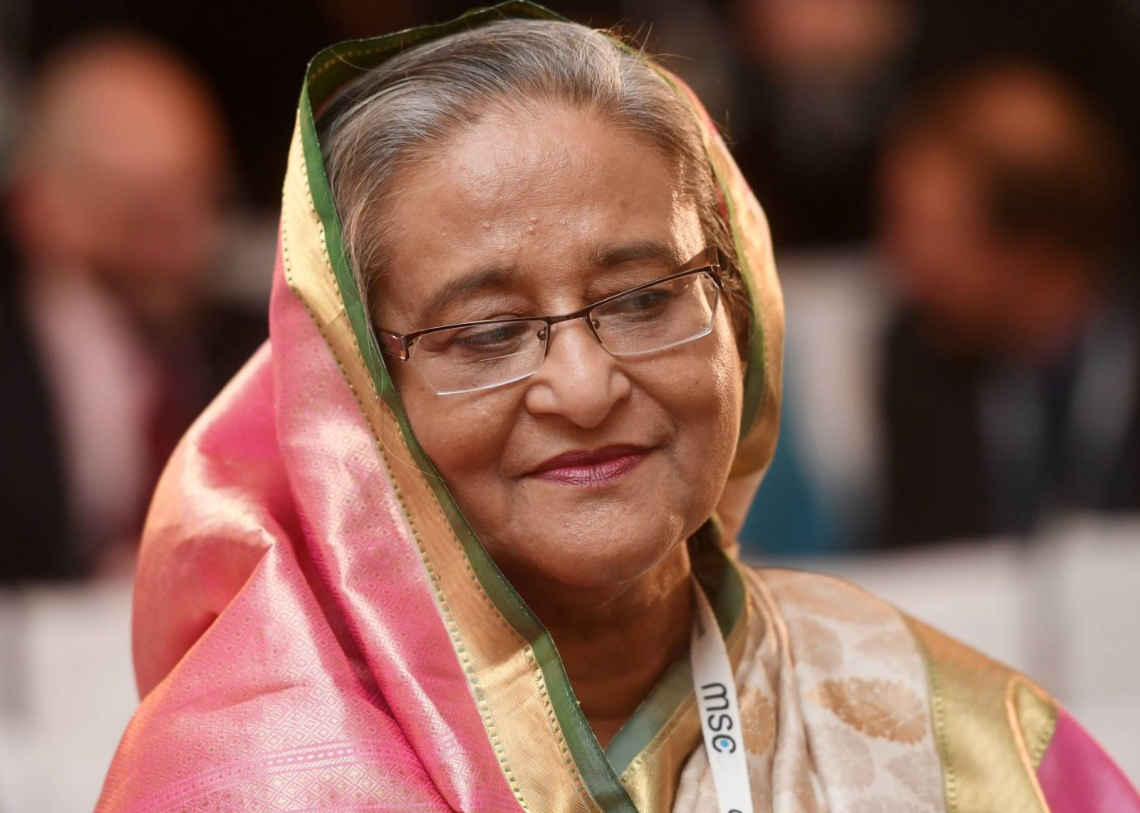
CALLS FOR HASINA TO STEP DOWN
WHY DO PROTESTERS WANT HASINA’S RESIGNATION?
؟WHAT HAS HASINA SAID RECENTLY
WHAT TRIGGERED THE JOB-QUOTA PROTESTS?
FLAGGING ECONOMY, UNEMPLOYMENT
HASINA WINS JANUARY ELECTION
Muhamad Yehia
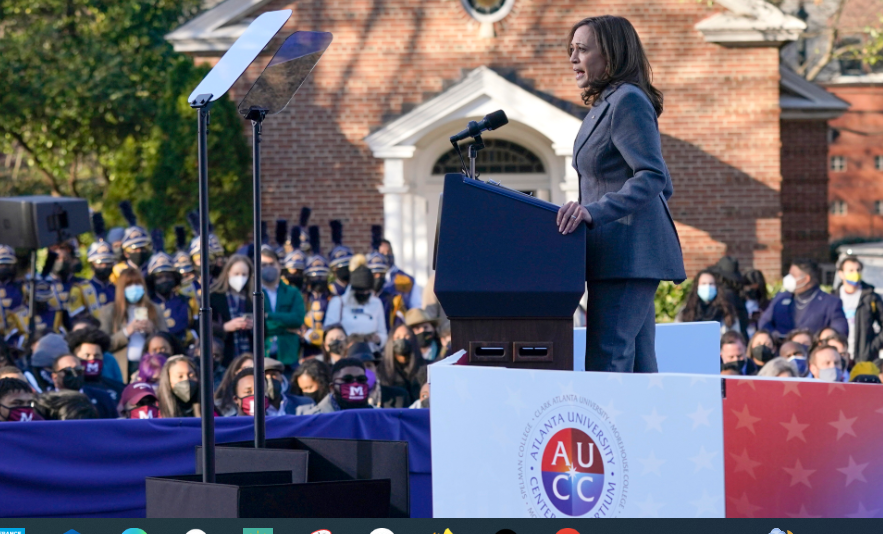
Kamala Harris has range. She can grill nominees for the Supreme Court or meet with foreign dignitaries, then pivot to hosting a Diwali celebration or dancing enthusiastically alongside an HBCU-styled marching band.
It is a dexterity that Harris, the first Black woman and Asian American to serve as vice president, developed as a person of color to navigate the corridors of power or Main Street in a nation where race and identity influence how one is received or embraced.
Harris, the daughter of immigrants from Jamaica and India, is an adroit code-switcher, a term that can include deliberately adjusting one’s speech style and expression to optimize relatability and ensure she gets a message across.
Former President Donald Trump, during a contentious interview session at a meeting of the National Association of Black Journalists, showed no familiarity with the concept. He implied that Harris is inauthentic for embracing all aspects of her heritage. His failure to recognize code-switching also speaks to a prevailing belief that whiteness, often correlated with speaking in plainly enunciated English, is the default in our politics and democracy.
“We need to be celebrating our whole selves, which means we need to celebrate all of our identities,” said Christine Chen, co-founder and executive director of APIAVote, a nonpartisan civic engagement organization focused on the Asian American Pacific Islander communityRelated Stories
more that a candidate can embrace their multiple identities, I think that’s a way to connect with different communities and different people who identify on different issues that you stand on,” added Chen, who is Chinese American
Trump, who falsely suggested to the annual candidate can embrace that the vice president has been misleading voters about her race, waded into murkier waters by insinuating Harris cannot be trusted because she “happened to turn Black” after she promoted her Indian heritage
Harris doesn’t need to code-switch to prove she is a Black and Indian American woman; she was born that way.
Shereen Marisol Meraji, former co-host of the award-winning NPR podcast “Code Switch,” said Harris’ identity is layered and can still be challenging to navigate in a nation that once encouraged multiracial people to favor one identity over another.
“If you walk through the world as I have, where I’m trying very much to embrace both sides of myself, then it’s like you get put through these authenticity tests,” said Meraji, who is of Iranian and Puerto Rican heritage.
What to know about the 2024 Election
- Democracy: American democracy has overcome big stress tests since 2020. More challenges lie ahead in 2024.
- AP’s Role: The Associated Press is the most trusted source of information on election night, with a history of accuracy dating to 1848. Learn more.
An assistant professor of race and journalism at the University of California, Berkeley, Meraji added: “The ability to code-switch and go into different communities … it is a huge asset. And I think for people who are in competition with Kamala Harris, it’s also quite threatening.”
Many politicians of color code-switch to ensure vital information is delivered to voters and constituents with cultural resonance. This is a familiar concept among Americans of color, including the 33.8 million people identified as being more than one race, according to the last U.S. Census.
Muhamad Yehia
HARARE, Zimbabwe (AP) — Zimbabwe police have arrested 18 political activists and hauled some of them off a plane, their lawyers said Thursday, in the latest clampdown by the government after warning it would crush opposition protests ahead of its hosting of a meeting of the southern African heads of state this month.
The Zimbabwe Lawyers for Human Rights group said it was representing the activists, who were detained on Wednesday.
Among the activists arrested is Namatai Kwekweza, a 25-year-old pro-democracy campaigner and the inaugural winner of the Kofi Annan NextGen Democracy Prize in 2023. The prize is awarded by the late United Nations secretary-general’s foundation to young people committed to the principles of democracy.
Amnesty International has condemned the arrests, while Annan’s foundation said it was “deeply concerned” by the incident
Kwekweza and three other activists were removed from a plane on the tarmac of the Robert Mugabe International Airport in the capital, Harare. Another 14 activists were arrested the same day for holding a protest in another town.
The four taken off the plane are being charged with disorderly conduct for being part of a courthouse protest in late June demanding the release of 77 opposition party members who have been in pre-trial detention for over six weeks
The 77 activists were arrested at a barbecue at the house of one of their leaders. Police said they gathered “with the intent to promote violence, breaches of peace or bigotry.” A mother and her 1-year-old baby were among those detained
President Emmerson Mnangagwa, who took over from autocrat Robert Mugabe in a coup in 2017, has been accused of cracking down on political opposition in a similar way to Mugabe, who had led the country for 37 years since independence.
Numerous opposition members, university students and labor unionists have been arrested since Mnangagwa, 81, became president
He denies being oppressive but has warned the opposition against what he has called inciting violence. Authorities have moved to subdue any new protests ahead of the meeting of southern African leaders in Harare on Aug. 17
Mnangagwa, Zimbabwe’s first lady and others were sanctioned by the United States earlier this year for alleged involvement in gold and diamond smuggling and human rights abuses.
Muhamad yehia
Venture capital companies are reporting renewed interest in Egyptian startups after a difficult few years for the country’s tech entrepreneurs.
Emirati and Saudi investors are leading the return, say VC experts, after record-high inflation and a prolonged foreign exchange crisis dented deal-making.
Since the Egyptian authorities floated the pound in March and the economy has shown signs of improvement, appetite appears to be growing again
“With the stabilisation of the currency earlier this year and the renewed influx of FDI [foreign direct investment] and foreign interest, there’s a lot of renewed interest in the market,” says Dina El Shenoufy, chief investment officer at Flat6Labs, a venture capital company in Cairo.
Investors from the Gulf account for most of this interest, she says.
Egypt’s startups have raised $83 million in the first half of this year, down from $289 million in the first six months of 2023.
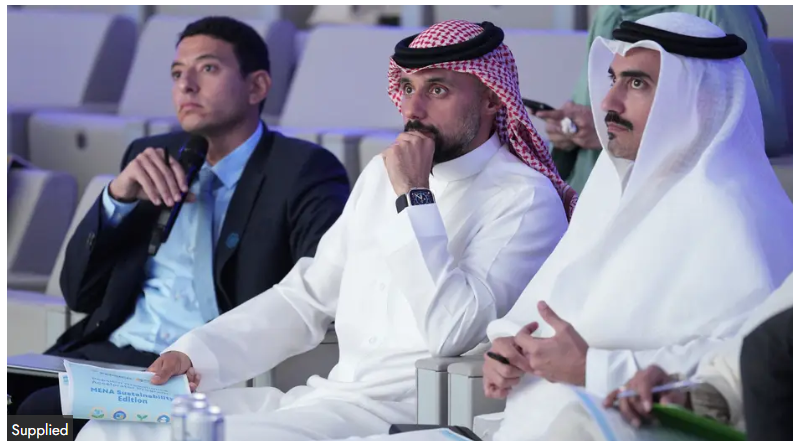
Prince Khaled bin Alwaleed bin Talal Al Saud, founder and CEO of KBW Ventures, is one of the Gulf investors who has taken an interest in Egypt. The Saudi entrepreneur has invested in NoorNation, which produces technology that can deliver water and electricity to isolated communities.
Egyptian business confidence improves but pessimism remains
Egypt confronts sell-off of more state assets
Egypt’s business activity rises as inflation pressure falls
“This is the first startup from Egypt that we have invested in,” says Prince Khaled, who adds that he looked at potential investments in the country for the past five to six years before NoorNation caught his eye.
Flat6Labs plans to launch an $85 million Africa seed fund this year. Most of it is weighted towards North Africa, with half of the total earmarked for Egypt.
“In terms of the resilience of the VC [market] in Egypt at large, I think that’s going to come back,” El Shenoufy says. “I don’t think the need for innovation is going to dry up any time soon.”
However, the exchange rate difficulties in Egypt, which made it challenging for companies to repatriate funds, do concern some investors.
Karim Samra, founder and CEO of Changelabs, a entrepreneurial support organisation, says investors that are looking at Egyptian startups have an increased preference for those with customers outside the country.
“There’s a lot of pressure for all of these successful companies to expand more quickly to other markets,” Samra says.
MNT-Halan, a fintech that is one of three Egyptian-born “unicorns” – a startup valued at over $1 billion – is the latest company to announce an expansion into other markets. In a recent funding round it raised $157.5 million.
It has since expanded into Pakistan and has just announced its acquisition of Tam Finans, a Turkish commercial finance company with a loan book worth more than $300 million.
Samra says investors are increasingly hesitant to deploy funds to companies that only serve the Egyptian market.
“We need more local fund managers with the right background and expertise,” he says. “We need more qualified startups as well that are well run and understand how to raise money and how to deploy money.
“[International] VCs want to see locals putting their money into local companies. And if they don’t see that, they worry why the locals aren’t investing.”
Last week Changelabs announced a Fintech for Future accelerator programme to help 12 small to medium-sized Egyptian enterprises develop their products and raise funding.
Elsewhere the government is targeting record amounts of foreign direct investment this financial year, in an attempt to capitalise on the cheaper currency.
“I expect Egypt will continue to be at the top of the African market when it comes to VC investment,” Samra says. “I also expect that corporates and other actors that are currently on the sidelines will start investing more in VC.
“The question is, are we going to be able to absorb that capital by providing strong investment-ready startups?”
Muhamad yehia
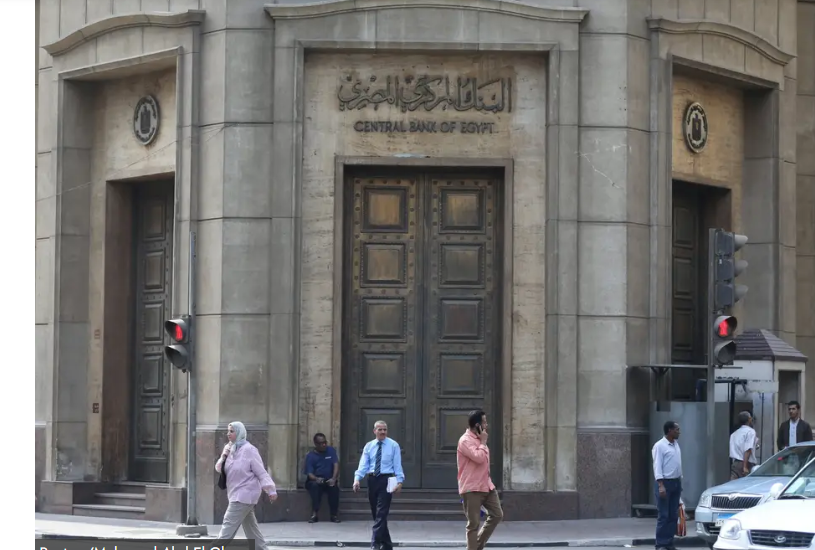
Saudi Arabia is planning to convert its $10 billion deposit with the Central Bank of Egypt (CBE) into an investment.
The Saudi investment minister Khalid al-Falih announced the news during a meeting with Egyptian prime minister Mostafa Madbouly on Thursday.
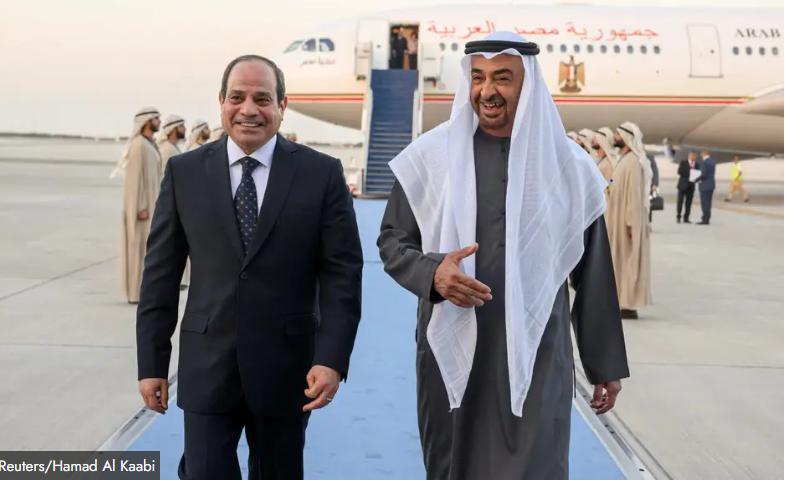
It follows a $35 billion agreement by the UAE sovereign wealth fund ADQ to develop Ras El Hekma on the north coast in February. This deal included $11 billion of Emirati central bank deposits converted to local currency for investment.
Analysts say that the proposed Saudi deal could be conducted along similar lines
“This was kind of expected,” said Nada Hashim, a senior investment analyst at CI Capital Asset Management.
“In the last few years, the GCC has preferred to give any support in the form of investments rather than deposits.”
Speaking to reporters, Al-Falih said that the Saudi government sees Egypt “as a complement to the kingdom, a promising market and an important export platform to other countries in the region”.
Hashim said she expects the investments to be used either for the much talked about Ras Gamila resort project on the Red Sea, or for investment in public equities, most likely in export or import substitute sectors.
- Gulf investors show renewed appetite for Egypt’s startups
- Egypt seeks to treble foreign direct investment to $30bn
- IMF urges Egypt to expand private sector after loan release
The government might be hoping for the latter, she said, as “an opportunity for them to showcase the incentives that we’ve been talking about”. They could attract further investment from Saudi Arabia and elsewhere.
The General Authority for Investment has introduced new programmes over the past few years to streamline the process for foreign investors in Egypt.
Speaking at talks on Thursday, chairman of the Saudi-Egyptian Business Council Bandar al-Amiri said that these efforts have solved 80 percent of Saudi investors’ problems with operating in Egypt.
At the same meeting Muteb Al Shathri, senior director of Mena investments at the Public Investment Fund, said that its investments in Egypt had reached around $3 billion. He added that this number is likely to double following the proposed debt swap.
Muhamad Yehia
Egyptian authorities have received the second tranche of a $35 billion investment from the UAE, local media reported on Tuesday.
The payment secures the right of Abu Dhabi sovereign wealth fund ADQ to develop the land of Ras El Hekma on Egypt’s north coast.
The $20 billion tranche consists of $14 billion fresh money and $6 billion of Emirati deposits currently held at the Central Bank of Egypt (CBE).
The first tranche of $15 billion was transferred shortly after the Ras El Hekma
Following disbursement of the first tranche, the CBE devalued the pound in response to a growing parallel currency market that was attracting foreign liquidity away from the formal banking sector.
The devaluation helped to secure the finalisation of an International Monetary Fund package worth $8 billion and subsequent agreements with the World Bank and European Union.
According to local reports, the CBE is likely to inject $6 billion of the new funds into the banking sector to help clear arrears and make foreign currency available for essential and non-essential imports.
Abu Dhabi’s $35bn throws Egypt a liquidity lifeline
Egypt must deal with its fundamental challenges
Abu Dhabi’s futuristic vision of an Egyptian metropolis
In its purchasing managers index for April, in which Egypt recorded negative growth, S&P Global said Egyptian importers reported greater availability of foreign currency since the devaluation of the pound.
But it added that foreign exchange supply-demand imbalances persisted throughout the month and hindered economic activity.
On Monday President Abdel Fattah El Sisi inaugurated the first phase of the Future of Egypt project, which ultimately seeks to reclaim 2.2 million feddans (924,000 hectares) of agricultural land.
The project will be irrigated by the Future of Egypt Canal, a 174km-long artificial river in the Western Desert fed by natural aquifers and treated wastewater.
Speaking at the project’s inauguration, President Sisi said the area targeted for cultivation was equal to “three large governorates”, arguing the need for the public sector to take the lead on such a project.
It is part of a larger government effort to increase agricultural land across Egypt by 45 percent by 2027 in a bid to achieve food self-sufficiency. Egypt is regularly the world’s largest buyer of wheat, importing 11 million tonnes in 2023.
In March planning minister Hala Al Saeed reaffirmed ambitions to increase the percentage of locally grown wheat from 45 percent in 2021 to 53 percent in 2024 and 56 percent by 2026.
President Sisi voiced his support for prioritising cash crops that could sell for “three times” the price of wheat.
“We want to benefit from every drop of water,” he said.
Muhamad Yehia
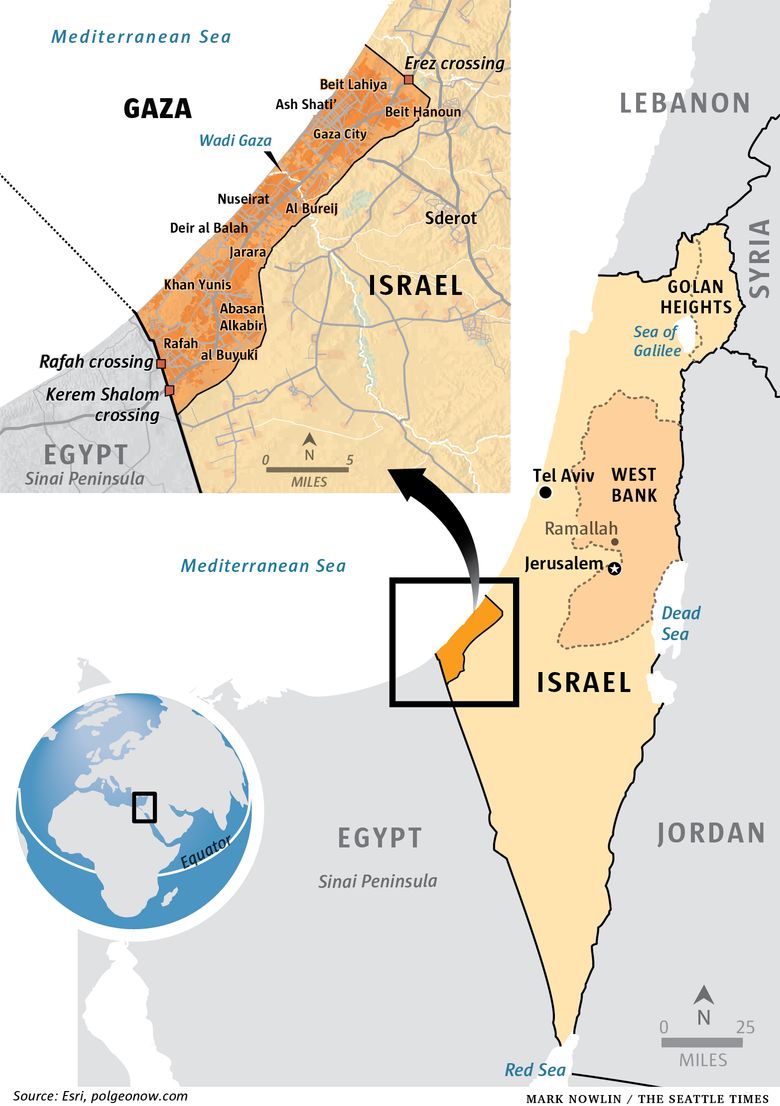
JERUSALEM — The predawn killing of a top Hamas leader in Tehran, Iran, on Wednesday left the entire Middle East on edge, bringing vows of revenge from Iran’s leaders and threatening to derail fragile negotiations for a cease-fire in the Gaza Strip.
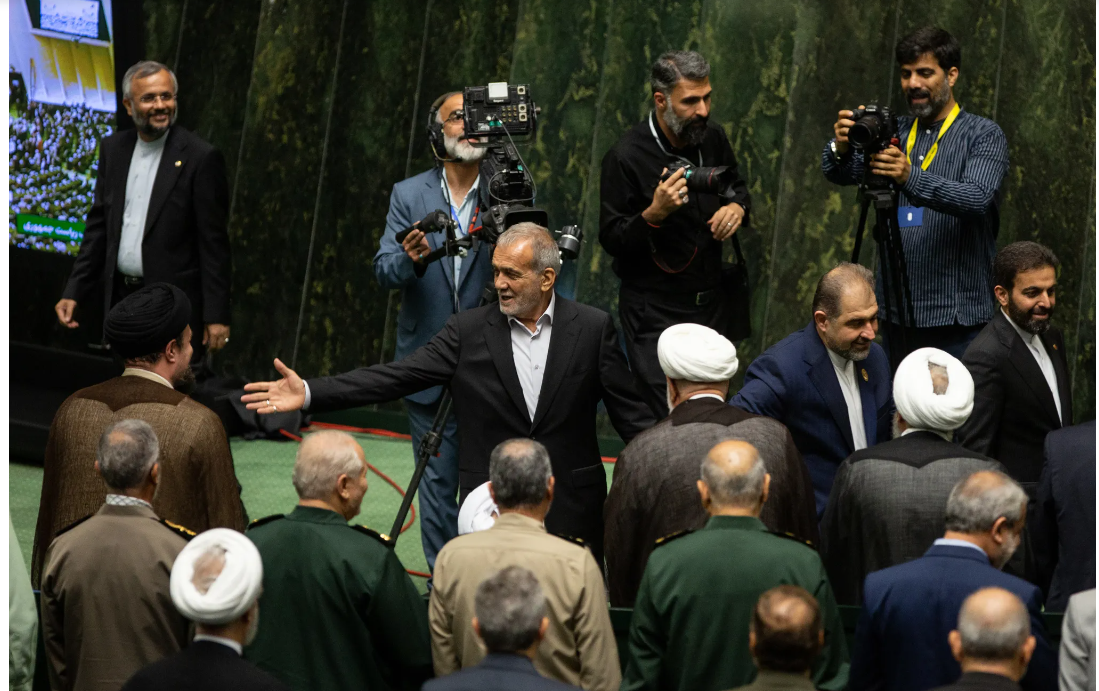
The Hamas leader, Ismail Haniyeh, 62, a top negotiator in the cease-fire talks who had led the militant group’s political office in Qatar, was killed after he and other leaders of Iranian-backed militant groups had attended the inauguration of Iran’s new president.
Israeli leaders would not confirm or deny whether their country was behind the brazen breach of Iran’s defenses. But Iranian leaders and Hamas officials immediately blamed Israel and vowed to avenge the death of Haniyeh, heightening fears of a broader regional war.
Iran’s supreme leader, Ayatollah Ali Khamenei, issued an order for Iran to strike Israel directly, according to three Iranian officials briefed on the order.
And Iran’s new president, Masoud Pezeshkian, said in a statement Wednesday, a day after he was sworn into office with Haniyeh seated in the front row: “We will make the occupying terrorist regime regret its action. Iran will defend its sovereignty, dignity, reputation and honor.”
In recent years, Israel has carried out several high-profile assassinations in Iran, rattling the country’s leaders. In November, Prime Minister Benjamin Netanyahu of Israel told reporters that he had ordered the Mossad, Israel’s foreign intelligence service, to “act against the heads of Hamas, wherever they are.
Hours before the killing of Haniyeh in the Iranian capital, Israeli fighter jets had carried out a separate operation in the southern suburbs of Beirut, Lebanon’s capital, and killed Fouad Shukur, a senior member of Hezbollah, the Lebanese militia that, like Hamas, is backed by Iran. Hezbollah has been fighting a low-level war with Israel since October and has backed Hamas, which led a deadly rampage on southern Israel that precipitated the war in Gaza.

kur had been killed in the Israeli strike on a building in a densely populated Beirut suburb. Haniyeh was killed in an explosion in a Revolutionary Guard guesthouse in Tehran where he was staying.
The two attacks shifted the calculus in the Middle East after Israel and Hamas had appeared to be edging closer to a cease-fire in Gaza, where tens of thousands of people have been killed over nearly 10 months of war. Negotiators had hoped that such a deal would also lead to a truce between Israel and Hezbollah, which began firing into northern Israel in support of Hamas.
John Kirby, a White House national security spokesperson, said the Biden administration believed it was “too soon to know” what effect the assassination might have on negotiations over a cease-fire and the release of hostages. He said the United States was still in touch with officials from Egypt and Qatar who had been acting as mediators in the talks.
Now, the focus is on how Hamas and Hezbollah will respond to the attacks on their leaders, how Iran will react to a strike within its territory and whether either reaction will lead to the outbreak of a wider war.
A member of Hamas’ political bureau, Mousa Abu Marzouk, promised that the group would retaliate against Israel, saying the killing of Haniyeh had been “a cowardly act and will not go unpunished,” according to Al-Aqsa TV, a Hamas-run channel.
The Qassam Brigades, Hamas’ armed wing, also said in a statement that the killing was “a dangerous event” that would have repercussions for the entire region. “The enemy has miscalculated,” the statement added.
In a televised address Wednesday, Netanyahu, who did not mention the killing of Haniyeh in Tehran, struck a defiant tone and said Israel would not bow to external pressure to end the war in Gaza.
“Challenging days are ahead of us,” he said. “Since the attack in Beirut, we hear threats everywhere. Israel will exact a heavy price against any aggression — from any front.”
In a statement carried by Iranian state news media, Khamenei said that avenging Haniyeh’s death was “our duty” because he had been killed on Iranian soil. He promised to deliver “a severe punishment.”
He gave the order to strike back at an emergency meeting of Iran’s Supreme National Security Council, said the three Iranian officials, including two members of the Revolutionary Guard, who spoke anonymously because they were not authorized to speak publicly about sensitive issues.
Khamenei also instructed leaders from the Revolutionary Guard and the army to prepare plans for an attack and a defense in the event that the war expanded and Israel or the United States struck back, the officials said.
Iran’s Foreign Ministry accused the United States of being a “co-culprit” in the attack on Haniyeh. But Secretary of State Antony Blinken said during a trip to Singapore on Wednesday that the United States had not known about the strike before it happened.
“This is something we were not aware of or involved in,” he said in an interview with Channel News Asia in Singapore. Blinken said the Biden administration would continue to focus on trying to de-escalate the war between Israel and Hamas in Ga
“I went to bed yesterday thinking that, ‘OK, this can still be managed,’” Lebanese Foreign Minister Abdallah Bou Habib said in an interview with The New York Times on Wednesday. “But now when I got up this morning and read about Haniyeh, I thought, ‘Oh, gosh, it’s over.’”
Egypt’s foreign minister also condemned the killing in Tehran, calling it a “dangerous escalation.”
Qatari Prime Minister Mohammed bin Abdulrahman Al Thani, who has been helping to mediate indirect cease-fire negotiations between Hamas and Israel, suggested that Israel had damaged the effort by killing Haniyeh.
“How can mediation succeed when one party assassinates the negotiator on the other side?” Al Thani wrote on social media. “Peace needs serious partners & a global stance against the disregard for human life.”
Although Haniyeh was heavily involved in the cease-fire negotiations, U.S. and Israeli officials said that Yahya Sinwar, Hamas’ leader in Gaza, had wielded a decisive veto on any cease-fire proposal.
Einav Zangauker, whose son Matan was abducted during the Hamas-led attack on Israel in October, said she hoped Haniyeh’s death would not end the talks.
“Eliminating Haniyeh must not lead to the thwarting of the deal, passing a death sentence on our loved ones in captivity,” Zangauker said on social media.
In Gaza, some Palestinians said they worried that the assassination could further stall cease-fire negotiations, while others said that his death was of no concern, given the scale of their misery.
“He didn’t go through the suffering of displacement or hunger or feel any of these things we are feeling,” Reda Shahyon, a 42-year-old mother of two in Deir al-Balah, in central Gaza, said of Haniyeh. “He was sitting in a mansion, dignified, while we were dying of hunger and thirst and humiliation.”
Analysts said Hamas would look to quickly replace Haniyeh as the leader of the group’s political wing. “Hamas will survive,” said Joost Hiltermann, the Middle East and North Africa program director for the International Crisis Group. “They have plenty of other leaders.”
Some analysts said the assassination could provide a way out of the war by giving Netanyahu the ability to claim a major victory and agree to a cease-fire. But in his speech Wednesday, Netanyahu, who has vowed to destroy Hamas’ military and governing capabilities, indicated that Israel was not ready to end its offensive in Gaza.
“For months, people haven’t stopped telling me ‘end the war,’” he said. “I didn’t surrender to these voices then, and I will not now.”
Muhamad Yehia
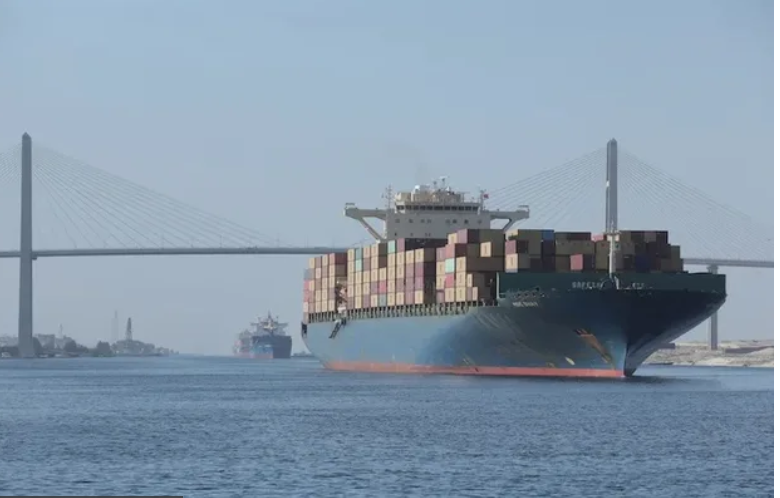
Egyptian prime minister Mostafa Madbouly has said the Suez Canal is reporting losses of up to $550 million per month due to ongoing regional tensions.
In January Suez Canal Authority chairman Osama Rabie said dollar revenues from the Suez Canal were down 40 percent since the start of the year after attacks forced global shippers to opt for longer but safer routes.
While no breakdown was given on the canal’s revenue contribution, the Suez Canal Economic Zone’s revenue hit EGP8.5 billion in 2023-24, surging 205 percent from EGP2.8 billion in 2016-2017, Egypt Daily News reported, quoting SCZone chairman Walid Gamal El-Din’s meeting with Madbouly.
Chinese investments in the economic zone have reached nearly $3 billion through 155 industrial, logistical and service companies.
The economic zone has also signed 29 memorandums of understanding with various international companies specialising in green hydrogen, which could draw investments worth $133 billion.
- Egypt to float Suez Canal subsidiary next year
This month Danish shipping major Maersk CEO Vincent Clerc said disruption in the Red Sea is expected to stretch into the third quarter of 2024, making the situation challenging for carriers and businesses.
In May Maersk said that the Red Sea disruption had resulted in a 15 to 20 percent industry-wide capacity loss on the Asia to North Europe and Mediterranean routes in the second quarter of 2024.
- Revenues down 64% from 2023
- Number of ships falls by 54%
- Saudi ports report fall in traffic
Suez Canal revenues continued to decline in May because of instability in the Red Sea, according to Egyptian media.
Revenues fell 64.3 percent year on year to $337.8 million. Last month 1,111 individual ships passed through the canal – down 54 percent on the May 2023 figure of 2,396.
Finance minister Mohamed Maait said last month that revenues could fall by up to 60 percent as a result of the disturbances to global shipping.
During the first four months of the year, Red Sea shipping fell by almost half compared to the same period last year.
In May, the average number of ships that passed through the Suez Canal per day was 22, compared to 24 in April and 51 in May 2023.
Yemen’s Ansar Allah group, widely referred to as Houthis, began attacking ships in the Red Sea last November, saying their actions were a response to the conflict in Gaza.
The impact of their attacks has been felt across the region. The Saudi Ports Authority reported on Sunday that maritime traffic fell to 986 ships in May, an 8 percent year-on-year decrease.
The kingdom reported a 10 percent year-on-year decrease in handled containers to 647,839 twenty-foot equivalent units (TEUs). The number of passengers fell by around a third.
Instability across the region has also pushed the Egyptian government to revise down its tourism targets for 2024 from 18 million to between 15.5 million and 16.5 million tourists.
Air cargo between Middle East and Europe up by 30%
Red Sea disruption to hit capacity by 20% says Maersk
Opinion: Spare a thought for the non-Gulf economies
A record 14.9 million tourists visited Egypt last year, just shy of its 15 million target. In the first four months of 2024, 5 million tourists entered Egypt, the second-highest figure on record for that period.
Tourism minister Ahmed Issa told Sky News Arabia last month that the sector is “growing at an unprecedented rate” despite the war in Gaza. His ministry is pursuing a large-scale investment programme to improve tourism infrastructure, he said.
Issa expects 25,000 new hotel rooms to open across the country in the next 12 months. The total number of rooms is forecast to more than double by 2028, from 200,000 at present to 420,000.
Muhamad Yehia
Jeff Bezos recently shocked Amazon investors to the core with this bold prediction
“I predict one day, Amazon will fail.”
In a candid interview, Bezos explained that he believes “Amazon will be disrupted one day” and eventually “will go bankrupt.”
What’s more, Bezos had been selling roughly $1 billion worth of Amazon stock every year…
But not because he was cashing out… instead, he’s reinvesting his money into a fast-emerging technology that he believes will “improve every business.”
What most people don’t know is… the technology that Bezos is busy betting on is reliant on a tiny manufactured component… a component that Amazon does NOT produce in-house.
That’s because another company (a fraction of the size of Amazon)…is producing a version of this component so powerful that it is absolutely annihilating the competition.
He’s not alone in seeing this emerging technology this way…
Mark Cuban is on record saying it will create the world’s first trillionaire
Elon Musk is contributing to a $1 billion investment in this technology
Even super-investor Warren Buffett says that it’s “enormously disruptive” and will have a “hugely beneficial social effect”
So what is it about this technology that has some of the most successful investors in the world pouring fortunes into it?
They see it as a massive investing opportunity – much bigger than Amazon, Tesla, and Berkshire Hathaway combined.
You see, even though these billionaires have been openly talking about this technology to anyone who will listen, most ordinary Americans still don’t know about its remarkable opportunity.
Namely, some market researchers believe this technology could potentially be worth up to $15.7 TRILLION!
With numbers like that, and with so many of the richest investors and entrepreneurs in the world racing to get in on this new technology… you can see why paying attention could really pay off.
But we believe the biggest returns are yet to come.
Which brings me back to the company I mentioned above that is manufacturing the tiny components fueling this technological breakthrough…
I rarely make big market predictions, but I don’t feel like I’m very far out on a limb with this one:
Five years from now, you’ll probably wish you’d bought this stock.
And the good news is that you can find out all about this company and this incredible technology today.
What I’ve told you so far is just the tip of the iceberg…
So, to help regular Americans like you understand how to take advantage of this emerging trend, The Motley Fool’s team of investment analysts has laid out the full story on this incredible tech trend in a brand-new report, which is included free just for trying out Motley Fool Stock Advisor (with its 30-day membership-fee-back guarantee).
And trust me… you are going to want to see this report before you invest $1 on any tech company.
You see, we’ve laid out the full story on this “powerful trend” in an exclusive report – but we encourage you to act quickly…
Because according to our analysts, this next-gen tech revolution looks like it’s about to take off, and I think you’ll want to get in on this before that happens.
This technology could hit the mainstream at any time.