human rights
Muhamad Yehia .. Cairo
Nicknamed the “Pope of the Poor,” Pope Francis dedicated his pontificate to the most disadvantaged. However, analysts say there were very limited changes in the area of women’s rights.
Committed to the poor, migrants, and the environment, Pope Francis devoted his pontificate to the most disadvantaged. But was he really that progressive?
The Argentine pontiff, who died on Easter Monday at the age of 88, dedicated his first visit to the Italian island of Lampedusa on 8 July 2013. On that occasion, he paid tribute to the migrants who had died in the Mediterranean and denounced “the globalisation of indifference” to their fate.
“He was a man of peace, a man for human dignity, and he always spoke out when people were mistreated and when migrants were scapegoated and demonised by forces that are no less present in this parliament”, Evin Incir, a Swedish Social Democrat MEP (S&D), told Euronews.
Nicknamed the “Pope of the Poor,” Francis had multiplied his actions in favour of people in need, inviting homeless people to dine at the Vatican and instituting a World Day of the Poor
Very interested in economic issues, the head of the Church also denounced the “excesses of globalisation”, finance that “tramples people underfoot,” and “the new idolatry of money.”
Ecology was at the heart of his pontificate, to which he dedicated his encyclical letter Laudato Si’, published in 2015.

Human rights
In the field of minority rights and women’s rights, the situation has not changed much.
While the head of the Church has opened the blessing of marriage to homosexual couples, the door to religious marriage remains closed to them
Women’s sexual and reproductive rights have been largely absent from his pontificate.
During a visit to Belgium, the Pope described abortion doctors as “hired killers” and compared abortion to homicide.
“He failed to see that restrictions on women’s sexual and reproductive rights will not put an end to abortions. It will only make abortions dangerous and not accessible to all women,” said Lina Gálvez, Spanish MEP (S&D).
“So he was a man who fought against a lot of inequalities, but it seems that these gender inequalities and this gap in women’s rights were not in his mind,” she adds.
Although he put forward women in the Vatican, they are still excluded from the priesthood. MEP Lina Gálvez does not hesitate to speak of a “missed opportunity.”
?The question remains: was he unable, or unwilling, to reform the Church in depth
Muhamad Yehia
A wave of Israeli airstrikes hit Yemen’s main airport Thursday just as the World Health Organization’s director-general said he was about to board a flight there. One of the U.N. plane’s crew was wounded, WHO chief Tedros Adhanom Ghebreyesus said in a post on X.
The Israeli military said it attacked infrastructure used by Yemen’s Houthi rebels at the international airport in the capital Sanaa, as well as power stations and ports, alleging they were used to smuggle in Iranian weapons and for the entry of senior Iranian officials.
Last week, Israeli jets bombed Sanaa and Hodeida, killing nine people. The U.S. military also has targeted the Houthis in Yemen in recent days.
Israel’s latest wave of strikes in Yemen follows several days of Houthi launches setting off air-raid sirens in Israel. The Houthis have also been targeting shipping in the Red Sea corridor, calling it solidarity with Palestinians in Gaza
Israel’s war in Gaza has killed over 45,000 Palestinians, more than half of them women and children, according to Gaza’s Health Ministry, which does not distinguish between fighters and civilians in its count
UN says at least 3 reportedly kille in Israeli airstrikes on airport in Yemen
UNITED NATIONS – The U.N. says at least three people were reportedly killed and dozens injured in Israeli airstrikes on the international airport in Yemen’s capital Sanaa.
A high-level U.N. delegation led by U.N. World Health Organization Tedros Adhanom Ghebreyesus was at the airport Thursday waiting to depart when the airstrikes took place, and a U.N. Humanitarian Air Service crew member was among the injured, U.N. associate spokesperson Stephanie Tremblay said.
The rest of the U.N. team left the airport and are “safe and sound” in Sanaa, and the injured crew member is being treated in a hospital, she said.
Tremblay said an assessment of damage to the airport will be made Friday morning to see whether Tedros and the U.N. team can leave Yemen
U.N. Secretary-General Antonio Guterres condemns the escalation in attacks between Yemen and Israel and says Thursday’s attacks on Sanaa International Airport, Yemen’s Red Sea ports and power stations in the country “are especially alarming,” Tremblay said.
The U.N. chief appealed to all parties to respect and protect civilians and civilian infrastructure, as required under international law, she said.
Guterres called for a halt to all military actions, and for “utmost restraint,” she said.
Displaced Syrians face dire winter conditions in tent camps, UN says
UNITED NATIONS – An estimated 730,000 people living in tents in camps for the displaced in northwest Syria are experiencing dire conditions this winter including from flooding, the U.N. humanitarian office said.
The U.N. Office for the Coordination of Humanitarian Affairs, or OCHA, said Thursday that more than 200 family tents in camps in Idlib and northern Aleppo were damaged by flooding from heavy rainfall on Dec. 23.
“Since the start of 2024, flooding and strong winds have damaged more than 8,800 family tents – including nearly 2,000 that were fully destroyed – across 260 camps,” OCHA said.
On another issue, OCHA quoted a report from the Syrian Observatory for Human Rights, a war monitor based in Britain, that since Dec. 8 – when Syrian President Bashar Assad was ousted — episodes involving explosive ordnance have killed more than 70 civilians including a dozen children and five women, with scores more injured
OCHA said mine experts have identified 109 new minefields across Idlib, Aleppo, Hama and Latakia since Nov. 26. So far, it said experts have destroyed more than 850 individual items of explosive ordnance.
Elsewhere, OCHA said Israeli forces on Wednesday reportedly wounded six civilians when they opened fire in Al-Suweisah town in Quneitra province, which includes the Golan Heights. It said residents were ordered to evacuate and Israeli forces imposed a curfew
Israeli attorney general orders investigation after TV report alleges that Netanyahu’s wife harassed political opponents
JERUSALEM — Israel’s attorney general has ordered police to open an investigation into Prime Minister Benjamin Netanyahu’s wife on suspicion of harassing political opponents and witnesses in the Israeli leader’s corruption trial.
The Israeli Justice Ministry made the announcement in a terse message late Thursday, saying the investigation would focus on the findings of a recent report by the Uvda investigative program into Sara Netanyahu.
The program uncovered a trove of WhatsApp messages in which Sara Netanyahu appears to instruct a former aid to organize protests against political opponents and to intimidate Hadas Klein, a key witness in the trial.
The announcement did not mention Sara Netanyahu by name, and the Justice Ministry declined further comment.
However, earlier Thursday, Benjamin Netanyahu blasted the Uvda report as “lies
The US says it pushed retraction of a famine warning for north Gaza. Aid groups express concern.
WASHINGTON — U.S. officials say they asked for — and got — the retraction of an independent monitor’s warning of imminent famine in north Gaza.
The Famine Early Warning System Network issued the warning this week. The new report had warned that starvation deaths in north Gaza could reach famine levels as soon as next month. It cited what it called Israel’s “near-total blockade” of food and water.
The U.S. ambassador to Israel, Jacob Lew, criticized the finding as inaccurate and irresponsible. The U.S. Agency for International Development, which funds the famine-monitoring group, told The Associated Press it had asked for and gotten the report’s retraction.
USAID officials tell AP that it had asked the group for greater review of discrepancies in some of the data.
Humanitarian and human rights officials expressed fear of U.S. political interference in the world’s monitoring system for famines. The U.S. Embassy in Israel and the State Department declined comment. FEWS officials did not respond to questions.
FEWS Net said in its withdrawn report that unless Israel changes its policy, it expects the number of people dying of starvation and related ailments in north Gaza to reach between two and 15 per day sometime between January and March.
The internationally recognized mortality threshold for famine is two or more deaths a day per 10,000 people.
FEWS was created by the U.S. development agency in the 1980s and still receives funding from it. But the monitor is intended to provide independent, neutral and data-driven assessments of hunger crises, including in war zones.
Netanyahu mulls plan to empty northern Gaza of civilians and cut off aid to those left inside
Muhamad Yehia
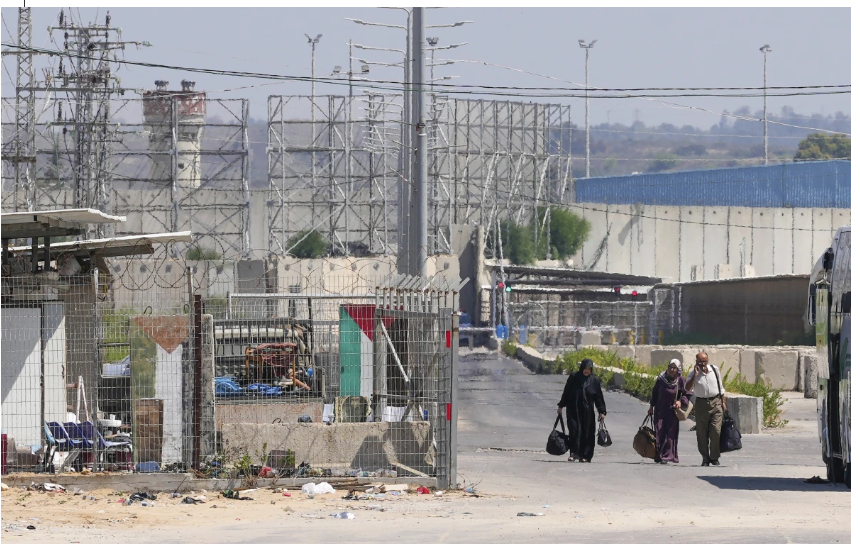
JERUSALEM (AP) — Israeli Prime Minister Benjamin Netanyahu is examining a plan to seal off humanitarian aid to northern Gaza in an attempt to starve out Hamas militants, a plan that, if implemented, could trap without food or water hundreds of thousands of Palestinians unwilling or unable to leave their homes.
Israel has issued many evacuation orders for the north throughout the yearlong war, the most recent of which was Sunday. The plan proposed to Netanyahu and the Israeli parliament by a group of retired generals would escalate the pressure, giving Palestinians a week to leave the northern third of the Gaza Strip, including Gaza City, before declaring it a closed military zone.
Those who remain would be considered combatants — meaning military regulations would allow troops to kill them — and denied food, water, medicine and fuel, according to a copy of the plan given to The Associated Press by its chief architect, who says the plan is the only way to break Hamas in the north and pressure it to release the remaining hostages
The plan calls for Israel to maintain control over the north for an indefinite period to attempt to create a new administration without Hamas, splitting the Gaza Strip in two
There has been no decision by the government to fully carry out the so-called “Generals’ Plan,” and it is unclear how strongly it’s being considered.
When asked if the evacuation orders in northern Gaza marked the first stages of the “Generals’ Plan,” Israeli military spokesperson Lt. Col. Nadav Shoshani said no.
“We have not received a plan like that,” he said
But one official with knowledge of the matter said parts of the plan are already being implemented, without specifying which parts. A second official, who is Israeli, said Netanyahu “had read and studied” the plan, “like many plans that have reached him throughout the war,” but didn’t say whether any of it had been adopted. The officials spoke on condition of anonymity, because the plan isn’t supposed to be discussed publicly
On Sunday, Israel launched an offensive against Hamas fighters in the Jabaliya refugee camp north of the city. The amount of aid reaching the north has declined significantly since Oct. 1, according to the U.N
The U.S. State Department spokesperson has said Washington is against any plan that would bring direct Israeli occupation in Gaza.
Human rights groups fear the plan’s potential toll on civilians
Human rights groups say the plan would likely starve civilians and that it flies in the face of international law, which prohibits using food as a weapon and forcible transfers. Accusations that Israel is intentionally limiting food to Gaza are central to the genocide case brought against it at the International Court of Justice, charges Israel denies.
A coalition of Israeli NGOs on Monday urged the international community to act, noting that “there are alarming signs that the Israeli military is beginning to quietly implement” the plan.
“States have an obligation to prevent the crimes of starvation and forcible transfer,” they wrote, warning that continuing a “‘wait and see’ approach will enable Israel to liquidate northern Gaza
So far, very few Palestinians have heeded the latest evacuation order. Some are older, sick or afraid to leave their homes, but many fear there’s nowhere safe to go and that they will never be allowed back. Israel has prevented those who fled earlier in the war from returning.
“All Gazans are afraid of the plan,” said Jomana Elkhalili, a 26-year-old Palestinian aid worker for Oxfam living in Gaza City with her family.
“Still, they will not flee. They will not make the mistake again … We know the place there is not safe,” she said, referring to southern Gaza, where most of the population is huddled in dismal tent camps and airstrikes often hit shelters. “That’s why people in the north say it’s better to die than to leave.”
The plan has emerged as Hamas has shown enduring strength, firing rockets into Tel Aviv and regrouping in areas after Israeli troops withdraw, bringing repeated offensives.
After a year of devastating war with Hamas, Israel has far fewer ground troops in Gaza than it did a few months ago and in recent weeks has turned its attention to Hezbollah, launching an invasion of southern Lebanon. There is no sign of progress on a cease-fire in either front.
Israel’s offensive on the strip has killed more than 42,000 Palestinians, according to Gaza’s Health Ministry, which doesn’t distinguish between civilians and combatants, but says more than half of the dead are women and children
People in northern Gaza could be forced to ‘surrender or starve’
The Generals’ Plan was presented to the parliament last month by a group of retired generals and high-ranking officers, according to publicly available minutes. Since then, officials from the prime minister’s office called seeking more details, according to its chief architect, Giora Eiland, a former head of the National Security Council
Israeli media reported that Netanyahu told a closed parliamentary defense committee session that he was considering the plan.
Eiland said the only way to stop Hamas and bring an end to the yearlong war is to prevent its access to aid.
FILE – Retired Israeli Gen. Giora Eiland speaks to army officers before holding a press briefing at Israel’s Defense Ministry in Tel Aviv, Israel
“They will either have to surrender or to starve,” Eiland said. “It doesn’t necessarily mean that we’re going to kill every person,” he said. “It will not be necessary. People will not be able to live there (the north). The water will dry up
He believes the siege could force Hamas to release some 100 Israeli hostages still being held by the group since its Oct. 7 attack that triggered Israel’s campaign. At least 30 of the hostages are presumed dead.
Human rights groups are appalled
“I’m most concerned by how the plan seems to say that if the population is given a chance to evacuate and they don’t, then somehow they all turn into legitimate military targets, which is absolutely not the case,” said Tania Hary, executive director of Gisha, an Israeli organization dedicated to protecting Palestinians’ right to move freely within Gaza.
The copy of the plan shared with the AP says that if the strategy is successful in northern Gaza, it could then be replicated in other areas, including tent camps further to the south sheltering hundreds of thousands of Palestinians.
When asked about the plan Wednesday, U.S. State Department spokesperson Matthew Miller said the U.S. was going to “make absolutely clear that it’s not just the United States that opposes any occupation of Gaza, any reduction in the size of Gaza, but it is the virtual unanimous opinion of the international community.”
In northern Gaza, aid has dried up and people are trapped
The north, including Gaza City, was the initial target of Israel’s ground offensive early in the war, when it first ordered everyone there to leave. Entire neighborhoods have been reduced to rubble since then.
About 80 trucks carrying aid have entered through crossings in Gaza’s north since Oct. 1, down from roughly 60 trucks a day previously, according to the U.N. website tracking deliveries. A senior U.N. official said one small shipment of fuel for hospitals has entered the north since Oct. 1. The official spoke on the condition of anonymity to discuss confidential information.
COGAT, the Israeli body facilitating aid crossings into Gaza, denied that crossings to the north have been closed, but didn’t respond when asked how many trucks have entered in recent days.
The U.N. official said that only about 100 Palestinians have fled the north since Sunday.
“At least 400,000 people are trapped in the area,” Philippe Lazzarini, head of the U.N.’s agency for Palestinian refugees, wrote on X Thursday. “With almost no basic supplies available, hunger is spreading
Troops have already cut off roads between Gaza City and areas further north, making it difficult for people to flee, said two doctors in the far north — Mohammed Salha, director of al-Awda Hospital, and Dr. Rana Soloh, at Kamal Adwan Hospital.
“North Gaza is now divided into two parts,” Soloh said. “There are checkpoints and inspections, and not everyone can cross easily
CAIRO (AP) — International experts portrayed a grim picture for war-torn Sudan in a report Thursday warning that 755,000 people are facing famine in the coming months, amid relentless clashes between rival generals.
The fighting has created a hunger catastrophe at a scale not seen since the Darfur conflict in the early 2000s, senior United Nations officials said.
The latest findings come from the Integrated Food Security Phase Classification, or IPC, an initiative set up in 2004 during the famine in Somalia that now includes more than a dozen U.N. agencies, aid groups, governments and other bodies.
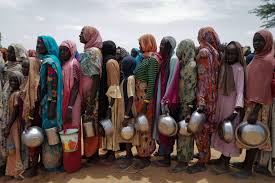
The report said that 8.5 million people are facing extreme food shortages after 14 months of conflict in Sudan and that hunger has spread to the capital Khartoum and Jazira province, once Sudan’s breadbasket.
“It is truly heartbreaking to see food scarcity and deprivation on the rise,” said John Makoni, a national director for World Vision, one of the largest aid groups working in Sudan. “We have a looming catastrophic situation that is quickly approaching.”
The northeastern African country descended into chaos in April last year. That’s when simmering tensions between the country’s military, led by Gen. Abdel-Fattah Burhan, and a notorious paramilitary group, the Rapid Support Forces, commanded by Gen. Mohamed Hamdan Dagalo, exploded into open fighting in Khartoum and elsewhere in the country.
The devastating conflict has killed more than 14,000 people and wounded 33,000 others, according to the United Nations, but rights activists say the toll could be much higher.
The conflict created the world’s largest displacement crisis with more than 11 million people forced to flee their homes. Human rights experts working for the United Nations said that both warring sides used food and starvation as a war weapon.
The report on hunger said people facing the highest level of starvation in the coming months are in 10 provinces, including Khartoum; the Darfur and Kordofan regions; and the provinces of Blue Nile and Jazira. The number was zero in June 2023 and it surged to 755,000 over the past year, it said.
“The conflict has not only triggered mass displacement and disruption of supply routes, market systems and agricultural production, it has also severely limited access to essential humanitarian assistance, exacerbating an already dire situation,” the report said.
Another 8.5 million people are classified in the second worst level of starvation, or Phase 4, meaning that the risk of hunger-related death is rapidly increasing, the IPC report said. Those people are facing extreme food shortages, acute malnutrition and excessively high disease levels, it added.
Overall, 25.6 million people, more than half of the country’s 47 million population, face “crisis or worse conditions” between June and September. It warned about a risk of famine in 14 areas “if the conflict escalates further, including through increased mobilization of local militias.”
“The situation is especially critical for populations trapped in areas affected by direct conflict and/or insecurity and lack of protection,” the report said. It referred to Darfur, Kordofan, Khartoum and Jazira where fighting raged for months.
The current crisis — unlike the Darfur conflict in the early 2000s — impacts the whole country, and threatens to destabilize the entire horn of Africa region, said Cindy McCain, head of the World Food Program.
“We urgently need a massive expansion of humanitarian access and funding so we can scale-up our relief operations, and halt Sudan’s slide into a humanitarian catastrophe,” she said.
The conflict has wrecked the country and created a crisis that will impact its future for generations. At least 17 million children are out of school, since over 90% of the country’s schools are closed because of the war. About 4 million children under 5 suffer from acute malnutrition, with 730,000 of those projected to be at imminent risk of dying, said UNICEF Executive Director Catherine Russell.
“The consequences of the violence, of the displacement of the, you know, lack of food, the lack of security is just devastating for women and children in Sudan,” Russell said in an interview after her trip to Sudan earlier this week. She said UNICEF needs $840 million to continue its operations and help Sudan’s children. The U.N.’s $4.1 billion humanitarian appeal for this year was only 16% funded as of June.
“It’s important for the international community to realize that we have to get more resources to Sudan,” she said. “But we also need to push the parties, hopefully, to peace. That’s really, at the end of the day. what we need here.”
The conflict has been marked by atrocities, including rape, gang rape and ethnic-motivated attacks, which rights groups say amount to war crimes and crimes against humanity. In recent months, the fighting has expanded to new areas, including agricultural centers such as Jazira province, which the RSF seized last year.
Tjada D’Oyen McKenna, chief executive of nongovernmental organization Mercy Corps, said that the expansion of fighting has devastated food production, and caused severe malnutrition among children, pregnant women and breastfeeding mothers, the chronically ill and older people.
“Sudan has become one of the world’s largest and most ignored man-made tragedies,” McKenna said. “This crisis demands urgent diplomatic efforts to ensure the rapid and safe delivery of humanitarian aid and protection of civilians.”
QU Dongyu, director-general of the U.N.’s Food and Agriculture Organization, said the IPC report revealed “a deepening and rapid deterioration of the food security situation in Sudan with millions of people’s lives at risk.”
At least several hundred people are in prison in Tunisia solely for writing checks they were later unable to pay, Human Rights Watch said in a report published. The practice amounts to imprisonment for debt, which violates international human rights law, and which destroys families and businesses.
In the 41-page report, “‘No Way Out’: Debt Imprisonment in Tunisia,” Human Rights Watch documents the consequences of Tunisia’s archaic legislation on checks with insufficient funds.
The law, in addition to sending insolvent people to prison, or to live in hiding or exile, fuels a cycle of indebtedness and reduces entire households to lives of hardship.
In the context of Tunisia’s current economic crisis, the authorities should urgently replace the legal provisions that allow for debt imprisonment with legislation that distinguishes between willful refusal and genuine inability to pay.
Those imprisoned often face stigma, and the lack of income while they are in prison or trying to escape prosecution can affect the enjoyment of their human rights, including access to basic services such as health care, housing, or education.
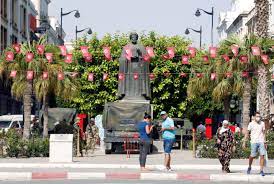
Two parliament members in Tunisia have been placed in provisional detention, according to a statement from an opposition party. Late last week, an independent MP, was detained after he criticised the president’s decision to suspend parliament and sack the prime minister and other top officials.
Maher Zid and Mohamed Affes of the Islamis Al-Karama party have been placed in provisional detention, according to a statement from party head Seifeddine Makhlouf.
Al-Karama is allied to the Islamist-inspired Ennahdha party, the main opponent of the president.
The latest arrests fall as the United States called on Tunisia to return swiftly to its “democratic path“.
A week after his shock move, President Kais Saied has yet to name a new prime minister.
He has rejected accusations he staged a “coup” and said he acted within the constitution, which allows the head of state to take unspecified exceptional measures in the event of an “imminent threat”.
He has also declared a crackdown on corruption, accusing 460 businessmen of embezzlement.
Nothing to fear for freedoms and rights
On Friday, he stressed his hatred for dictatorship, stressing that there was “nothing to fear” concerning freedoms and rights in Tunisia.
But political commentator Slaheddine Jourchi said the recent arrests were “a strategic mistake” and “not consistent with the president’s statements”.
“Everyone expected him to begin with the dangerous corruption cases and with waging a direct battle against known parties, but these first arrests were of opponents,” the analyst said.
Meanwhile, Rights groups including Amnesty International and Human Rights Watch have expressed concern over the arrest of Yassine Ayari last week. He was detained for branding the president’s decision to suspend parliament and sack the prime minister and other top officials a “military coup”.
The Harak party of former president and activist Moncef Marzouki expressed its “deep concern” and criticised what it said was a “slide towards a settling of political scores and repression of freedoms, contrary to the assurances provided by the head of state”.