
Articles
UN chief Guterres ‘gravely alarmed’ by reports of RSF assault on al-Fashir
The Reuters Daily Briefing newsletter provides all the news you need to start your day..
Reporting by Michelle Nichols, Katharine Jackson and Trevor Hunnicutt; Editing by Daniel WallisSept 21 (Reuters) – United Nations Secretary-General Antonio Guterres is “gravely alarmed” by reports of a full-scale assault on the Sudanese city of al-Fashir by the paramilitary Rapid Support Forces (RSF) and called on its leader to halt the attack immediately, a U.N. spokesperson said on Saturday.
The Reuters Daily Briefing newsletter provides all the news you need to start your day
In Nigeria’s food belt, fears of another flood as Cameroon opens dam
The Reuters Daily Briefing newsletter provides all the news you need to start your day. Sign up here.
Writing by MacDonald Dzirutwe, Editing by David Evans
Hezbollah leaders among 37 killed in Israeli strike in Lebanon
Sahar ragab
BEIRUT, Lebanon (AP) — Two Hezbollah leaders were among those killed in an Israeli airstrike on a Beirut suburb , Israel’s military said Saturday, as Lebanon raised the death toll from the attack to 37, including women and children.
Israel and Hezbollah continued to trade fire Saturday, a day after the airstrike claimed the lives of Ibrahim Akil, who was in charge of Hezbollah’s elite Radwan Force, and Ahmed Wahbi, another senior commander in the group’s military wing.
Firas Abiad told reporters that the dead included seven women and three children. He said another 68 people were wounded of whom 15 remained in hospital, adding that search and rescue operations were still ongoing, with the number of casualties likely to rise.
- The rare strike hit an apartment block in a densely populated south Beirut neighborhood on Friday afternoon during rush hour. It was the deadliest strike targeting the Lebanese capitalsince the 2006 Israel-Hezbollah war
Hezbollah confirms more than a dozen operatives were killed
Akil, the main target, had been wanted by the U.S. for years for his alleged role in the 1983 bombing of the U.S. Embassy in Beirut and in taking American and German hostages in Lebanon in the 1980s. He was under U.S. sanctions and the U.S. State Department last year announced a reward of up to $7 million for information leading to his “identification, location, arrest, and/or conviction.”s
Hezbollah announced overnight Friday that 15 of its operatives were killed by Israeli forces, but did not elaborate on the location of these deaths. Meanwhile, the Israeli army spokesperson, Lt. Col. Nadav Shoshani, said on Saturday a total of 16 Hezbollah fighters were killed in the strike
Israel earlier said Akil had been meeting with other militants in the basement of the apartment block.
Rescue workers digging through rubble
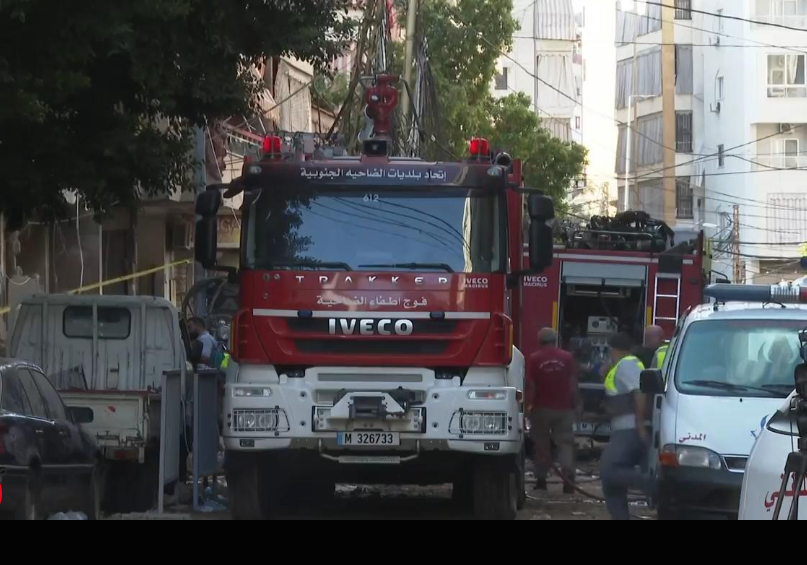
Lebanese troops cordoned off the area around the destroyed building as members of the Lebanese Red Cross stood nearby to take any bodies recovered from the rubble. On Saturday morning, Hezbollah’s media office took journalists on a tour of the scene of the airstrike where workers were still digging through building’s ruins.
The Minister of Public Works and Transport Ali Hamieh told reporters at the scene that 23 people are still missing.
The airstrike on the crowded Qaim street knocked out an eight-story building that had 16 apartments and damaged another one adjacent to it. The missiles destroyed the building and cut through the basement where the meeting of Hezbollah officials was being held, according to an Associated Press journalist at the scene.
Shops in a nearby building were badly damaged.
Hezbollah bombardments preceded Israeli airstrike
Friday’s deadly strike came hours after Hezbollah launched one of its most intense bombardments of northern Israel in nearly a year of fighting, largely targeting Israeli military sites. Israel’s Iron Dome missile defense system intercepted most of the Katyusha rockets.
The militant group said its latest wave of rocket salvos was a response to Israeli strikes on southern Lebanon. However, it came days after mass explosions of Hezbollah pagers and walkie-talkies killed at least 37 people — including two children. Some 2,900 others were wounded in the assault which has been widely attributed to Israel.
The Lebanese health minister said Saturday hospitals across the country were filled with the wounded.
Israel has neither confirmed nor denied involvement in the attack, which marked a major escalation in the past 11 months of simmering conflict along the Israel-Lebanon border.
Israel airstrikes, Hezbollah rocket attacks continue
On Saturday, Israel launched an intense wave of airstrikes on southern Lebanon, according to an Associated Press journalist in the area. The Israeli military said its air force was attacking Hezbollah targets, without providing further details. The militant group responded by firing a large number of rockets, local media reported
It remains unclear if there were any casualties in the latest strikes.
Earlier this week, Israel’s security cabinet said stopping Hezbollah’s attacks in the country’s north to allow residents to return to their homes is now an official war goal, as it considers a wider military operation in Lebanon that could spark an all-out conflict. Israel has since sent a powerful fighting force to the northern border.
Hezbollah has maintained that it will halt its strikes only when a cease-fire is reached in Gaza.
The tit-for-tat strikes have forced tens of thousands of people to evacuate their homes in both southern Lebanon and northern Israel
Israel and Hezbollah have traded fire regularly since Hamas’ Oct. 7 assault on southern Israel ignited the Israeli military’s devastating offensive in Gaza. But previous cross-border attacks have largely struck areas in northern Israel that had been evacuated and less-populated parts of southern Lebanon.
Iran condemns a Taliban delegate’s failure to stand for the Iranian national anthem
Iran expressed its deep displeasure Friday over a Taliban delegate’s failure to stand during the Iranian national anthem at an event in Tehran, state-run media said, following a similar incident in Pakistan earlier in the week.
The incident involving the Taliban delegate to the Islamic Unity Conference in the Iranian capital Thursday followed an episode in Pakistan in which a Taliban diplomat did not stand for the Pakistani anthem on Wednesday. Both host countries considered the gestures disrespectful, and in both cases Taliban officials have said it is customary in their country to sit when music is played.
Iran’s Foreign Ministry summoned the caretaker of the Afghan Embassy in Tehran on Friday to condemn the act by the Taliban delegate, Azizorahman Mansour, Iran’s state-run IRNA news agency reported. The ministry called it an “unconventional and unacceptable action by the Afghan envoy.
The Islamic Unity Conference is an annual event held in Iran to promote unity and solidarity among various Islamic sects, particularly between Sunni and Shia Muslims.
The Taghrib News Agency, which reports on Islamic world news, published a video from Mansour apologizing for his behavior at the conference, but saying it was in accordance with the norms in Afghanistan.
“In our country when we sing songs, we sit. I followed that norm,” Mansour said. “We apologize to the people who were upset.”
IRNA quoted the Afghan Embassy chief as saying the action by Mansour was a personal act and did not reflect the views of the Taliban government. Following the incident Wednesday in Pakistan, the Taliban had released a statement saying the diplomat did not stood up there because music was part of the anthem.
Iran and Afghanistan have a 960-kilometer (570-mile) long border, and it became has become a lifeline for many Afghans who have flocked to the neighboring country to search for work. Iranian authorities say about six million Afghans are in Iran. Activists believe the number is much higher.
Iran doesn’t formally recognize the Taliban government in Afghanistan, and has called for the formation of an inclusive Afghan government that involves all ethnic and religious groups. However, Iran maintains political and economic ties with Kabul and has allowed the Taliban to manage the Afghan embassy in Tehran.
Hezbollah leader vows retaliation against Israel for attacks on devices as both sides trade strikes
Muhamad Yehia
BEIRUT (AP) — The leader of Hezbollah vowed Thursday to keep up daily strikes on Israel despite this week’s deadly sabotage of its members’ communication devices, and said Israelis displaced from homes near the Lebanon border because of the fighting would not be able to return until the war in Gaza ends
Hezbollah and Israel launched fresh attacks across the border as Hassan Nasrallah spoke for the first time since the mass bombing of devices in Lebanon and Syria that he described as a “severe blow” — and for which he promised to retaliate
The two days of attacks targeting thousands of Hezbollah pagers and walkie-talkies have been widely blamed on Israel, heightening fears that 11 months of near-daily exchanges of fire between Hezbollah and Israel will escalate into all-out war. Israel has neither confirmed nor denied involvement in the attacks
During Nasrallah’s speech, Hezbollah struck at least four times in northern Israel, and two Israeli soldiers were killed in a strike earlier in the day. Israeli warplanes flew low over Beirut while Nasrallah spoke and broke the sound barrier, scattering birds and prompting people in houses and offices to quickly open windows to prevent them from shattering
Israel also launched attacks in southern Lebanon on Thursday, saying it struck hundreds of rocket launchers and other Hezbollah infrastructure, though it was not immediately clear if there were any casualties. The army claimed the launchers were about to be used “in the immediate future.
At the same time, the army ordered residents in parts of the Golan Heights and northern Israel to avoid public gatherings, minimize movements and stay close to shelters in anticipation of possible rocket fire
In recent weeks, Israeli leaders have stepped-up warnings of a potential larger military operation against Hezbollah, saying they are determined to stop the group’s fire to allow tens of thousands of Israelis to return to homes near the border
In a Thursday briefing, the Israeli defense minister said Hezbollah would “pay an increasing price” as Israel seeks to make conditions near its border with Lebanon safe enough for residents to return
“The sequence of our military actions will continue,” he said
The attack on electronic devices appeared to be the culmination of a monthslong operation by Israel to target as many Hezbollah members as possible all at once — but civilians were also hit. At least 37 people were killed, including two children, and some 3,000 wounded in the explosions Tuesday and Wednesday
AP AUDIO: Hezbollah leader vows retaliation against Israel for attacks on devices as both sides trade strikes
AP correspondent Karen Chammas reports on a second wave of exploding devices in Lebanon.
Nasrallah said the group is investigating how the bombings were carried out
“Yes, we were subjected to a huge and severe blow,” he said. “The enemy crossed all boundaries and red lines,” he said. Pointing to the number of pagers and walkie-talkies, he accused Israel of intending to kill thousands of people at one time. “The enemy will face a severe and fair punishment from where they expect and don’t expect.”
He said Hezbollah will continue its barrages into northern Israel as long as the war in Gaza continues, vowing that Israel will not be able to bring its people back to the border region. “The only way is stop the aggression on the people of Gaza and the West Bank,” he said. “Neither strikes, nor assassinations nor an all-out war will achieve that.
Earlier Thursday, Hezbollah said it had targeted three Israeli military positions near the border, two of them with drones. Israeli hospitals reported eight people lightly or moderately injured
Hezbollah says its near daily fire is a show of support for Hamas. Israel’s 11-month-old war with Hamas in Gaza began after its militants led the Oct. 7 attack on Israel
Israel has responded to Hezbollah’s attacks with strikes in southern Lebanon, and has struck senior figures from the group in the capital Beirut. The exchanges have killed hundreds in Lebanon and dozens in Israel and forced the evacuation of tens of thousands of residents on each side of the border
Israel and Hezbollah have repeatedly pulled back from an all-out war under heavy pressure from the United States, France and other countries
But in their recent warnings, Israeli leaders have said they are determined to change the status quo dramatically
Speaking to Israeli troops on Wednesday, Gallant said, “We are at the start of a new phase in the war — it requires courage, determination and perseverance.” He made no mention of the exploding devices but praised the work of Israel’s army and security agencies, saying “the results are very impressive.
He said that after months of fighting Hamas in Gaza, “the center of gravity is shifting to the north by diverting resources and forces.
Israel began moving more troops to its border with Lebanon on Wednesday as a precautionary measure, Israeli officials said. Israel’s army chief, Lt. Gen. Herzi Halevi, said plans have been drawn up for additional action against Hezbollah, though media reported the government has not yet decided whether to launch a major offensive in Lebanon
Lebanon is still reeling from the deadly device attacks of Tuesday and Wednesday
The explosions have rattled anxious Lebanese fearing a full-scale war. The Lebanese Army said it has been locating and detonating suspicious pagers and communication devices, while the country’s civil aviation authorities banned pagers and walkie-talkies on all airplanes departing from Beirut’s international airport until further notice.
The attack was likely to severely disrupt Hezbollah’s internal communication as it scrambles to determine safe means to talk to each other. Hezbollah announced the death of five combatants Thursday, but didn’t specify if they were killed in the explosions or on the front lines
The blasts went off wherever the holders of the pagers or walkie-talkies happened to be in multiple parts of Beirut and eastern and southern Lebanon — in homes and cars, grocery stores and cafes and on the street, even at a funeral for some killed in the bombings, often with family and other bystanders nearby
Many suffered gaping wounds on their legs, abdomens and faces or were maimed in the hand. Tuesday’s pager blasts killed 12 people, including two children, and wounded some 2,300 others. The following day’s explosion killed 25 and wounded more than 600, Health Minister Firas Abiad said, giving updated figures
Abiad told reporters that Wednesday’s injuries were more severe than the previous day as walkie-talkies that exploded were bigger than the pagers. He praised Lebanon’s hospitals, saying they had managed to deal with the flood of wounded within hours. “It was an indiscriminate attack. It was a war crime,” he said.
Mali officials close livestock markets over suspected links to militants
Muhamad Yehia
BAMAKO, Mali (AP) — Authorities in Mali’s capital announced Thursday after a deadly attack by al-Qaida-linked militants that they were closing several livestock markets that typically are run by an ethnic group that officials associate with the militants.
The al-Qaida-linked militant group JNIM claimed responsibility for the attacks Tuesday on a military training camp and the airport on the outskirts of Bamako. Malian officials said government forces suffered losses in the attack, but have released no official death toll.
Most livestock markets in Mali’s capital are run by Fulani people — also known as the Peuhl — who are believed to be the largest semi-nomadic ethnic group in the world, with communities stretching from Senegal to the Central African Republic. Fulanis also are disproportionately represented in Islamic militant groups in central Mali, which has led to them being stigmatized by other ethnic groups
Seven major livestock markets in the capital will be closed for “reasons of public order,” Abdoulaye Coulibaly, the governor of the district of Bamako, said in a statement late Thursday. The statement did not clarify how long the closures would last.
Rida Lyammouri, a senior fellow at the Policy Center for the New South, a think tank in Morocco, told The Associated Press that Mali’s government perceives Fulanis as generally working with jihadis and believes that the JNIM has infiltrated the capital with their help
Lyammouri said that “continues to feed into the narrative that all Fulanis support jihadist groups, which is not true,” Lyammouri said. “Jihadist groups do not discriminate on who could join, members of the group include Bambara, Dogon, Arabs, Songhai, and Tuareg, not only Fulanis.”
Mali, along with its neighbors Burkina Faso and Niger, has for more than a decade battled an insurgency fought by armed groups, including some allied with al-Qaida and the Islamic State group
Following military coups in all three nations in recent years, the ruling juntas have expelled French forces and turned to Russian mercenary units for security assistance instead
Since taking power, Col. Assimi Goita has struggled to stave off jihadi attacks. Attacks in central and northern Mali are increasing. In July, approximately 50 Russian mercenaries in a convoy were killed in an al-Qaida ambush.
Attacks in the capital of Bamako are rare, however.
Israeli airstrike in Beirut kills Hezbollah commander and more than a dozen
Muhamad Yerhia
BEIRUT (AP) — Israel launched a rare airstrike that killed a senior Hezbollah military official in a densely populated southern Beirut neighborhood on Friday. It was the deadliest such strike on Lebanon’s capital in decades, with Lebanese authorities reporting at least 14 people killed and dozens more wounded in the attack.
The Israeli military’s chief spokesman, Rear Adm. Daniel Hagari, said the strike on Beirut’s southern Dahiya district killed Ibrahim Akil, a commander of Hezbollah’s elite Radwan Force, as well as 10 other Hezbollah operatives.
“We will continue pursuing our enemies in order to defend our citizens, even in Dahiya, in Beirut,” said Israeli Defense Minister Yoav Gallant, describing the Israeli strike that targeted Akil as part of “a new phase of war.”
Several hours later, Hezbollah confirmed Akil’s death. In a statement, the Lebanese militant group described Akil as “a great jihadist leader” and said he had “joined the procession of his brothers, the great martyr leaders, after a blessed life full of jihad, work, wounds, sacrifices, dangers, challenges, achievements, and victories.
Akil served on Hezbollah’s highest military body, the Jihad Council. He was sanctioned by the United States for his alleged involvement in the 1983 bombing that killed more than 300 people at the U.S. Embassy in Beirut and the U.S. Marine Corps barracks
st year, the U.S. State Department posted a $7 million reward for information leading to his identification, location, arrest or conviction, citing his role in the embassy bombing and in the taking of American and German hostages in Lebanon in the 1980s
The strike came as a new cycle of escalation between the enemies raised fears of a full-out war erupting in the Middle East.
Hours before the Israeli strike, Hezbollah pounded northern Israel with 140 rockets as the region awaited the revenge promised by Hezbollah leader Hassan Nasrallah over this week’s mass explosions of pagers belonging to members of the Shiite militant group
The Israeli military did not provide the identities of the other Hezbollah commanders allegedly killed in its strike on the crowded neighborhood just kilometers from downtown Beirut.
Lebanon’s Health Ministry said at least 14 people were killed and 66 others were wounded in the attack, which leveled the apartment building where the Israeli army claimed Akil had been meeting with other militants in the basement. Nine of the wounded were in serious condition, the ministry added.
Local networks in Lebanon broadcast footage showing first responders sifting through the rubble of a collapsed high-rise in the Jamous area in the heart of Dahiya, where Hezbollah conducts many of its political and security operations.
The rescue operation continued into the late hours of Friday, hours after the attack, as first responders wrestled to remove the rubble to reach the basement of the building where apparently many of the bodies were located.
Friday’s airstrike — the deadliest such attack on a neighborhood of Beirut since Israel and Hezbollah fought a bloody, monthlong war in 2006 — hit during rush hour, as people were leaving work and children heading home from school
At Beirut’s St. Therese Hospital near the scene of the airstrike, crowds flocked to donate blood for those wounded in the attack.
“We are all together in this situation, so it’s my obligation,” said Hussein Harake, who lined up to donate blood.
From Israel, Gallant said he briefed senior military officials on the strike and vowed Israel would press on against Hezbollah “until we achieve our goal, ensuring the safe return of Israel’s northern communities to their homes.”
The strike came after Hezbollah launched one of its most intense bombardments of northern Israel in nearly a year of fighting, largely targeting Israeli military sites. Israel’s Iron Dome missile defense system intercepted most of the Katyusha rockets. The few that got through sparked small fires but caused little damage and no Israeli casualties.
Hezbollah described its latest wave of rocket salvos as a response to past Israeli strikes on southern Lebanon — not as revenge for the mass explosions of Hezbollah pagers and walkie-talkies on Tuesday and Wednesday that killed at least 37 people – including two children – and wounded 2,900 others in attacks widely attributed to Israel
Israel has neither confirmed nor denied involvement in this week’s sophisticated attacks, which signaled a major escalation in the past 11 months of simmering conflict along the Israel-Lebanon border.
Israel and Hezbollah have traded fire regularly since Hamas’ Oct. 7 assault on southern Israel ignited the Israeli military’s devastating offensive in Gaza. But previous cross-border attacks have largely struck areas in northern Israel that had been evacuated and less-populated parts of southern Lebanon
The last time Israel hit Beirut was in a July airstrike that killed senior Hezbollah commander Fouad Shukur.
“The attack in Lebanon is to protect Israel,” Hagari said at a news conference following Friday’s strike, describing both Shukr and Akil as the two military officials closest to Hezbollah leader Nasrallah.
Hagari also accused Akil of plotting a series of attacks against Israeli soldiers and civilians dating back decades, including a never-realized plan to invade northern Israel in a similar way to the Hamas-led Oct. 7 attacks.
After Friday’s Israeli airstrike, Hezbollah announced attacks on northern Israel, two of which it said targeted an intelligence base from where it claimed Israel directed assassinations.
Israel remains on edge, with Nasrallah vowing Thursday to keep up strikes on Israel despite the humiliating “blow” he said Hezbollah suffered in the sabotage of its communication devices.
“We are in a tense period,” Hagari told reporters Friday. “We are prepared on high alert both offensively and defensively.”
In recent days, Israel has sent a powerful fighting force to the northern border, designated as an official war goal the return of tens of thousands of displaced residents to their homes in northern Israel and ordered citizens near Israel’s border with Lebanon to stay close to bomb shelters. Hezbollah has maintained that it will only halt its fire when there is a cease-fire in Gaza.
Hamas, which continues to fight Israel in Gaza, condemned the Israeli strike targeting Akil as a “new crime” and “violation of Lebanese sovereignty.”
Even as the world’s attention turns to the surge in Israel-Hezbollah tensions, Palestinian casualties in the besieged Gaza Strip continued to mount.
Palestinian health authorities early Friday reported that 15 people, including children, were killed in Israeli strikes that targeted a family home and a group of people on the street in Gaza City. Israel’s campaign in Gaza has already killed at least 41,000 Palestinians, according to the Gaza-based Health Ministry, which doesn’t differentiate between fighters and civilians.
In response to a request for comment on the latest Gaza strikes, the Israeli military insisted on Friday that it took “feasible precautions to mitigate civilian harm” and accused Hamas of endangering civilians by operating in residential areas.
Israel’s bombardment and invasion of the Gaza Strip — launched in response to Hamas killing 1,200 people and taking 250 hostage in southern Israel on Oct. 7 — has wreaked vast destruction and displaced about 90% of Gaza’s population of 2.3 million
___ Frankel reported from Jerusalem. Associated Press writers Abby Sewell in Beirut; Fatma Khaled in Cairo; Isabel DeBre in Buenos Aires, Argentina; Bassam Hatoum in Beirut and David Rising in Bangkok contributed to this report.
Muhamad Yehia
JERUSALEM (AP) — With Israel’s defense minister announcing a “new phase” of the war and an apparent Israeli attack setting off explosions in electronic devices in Lebanon, the specter of all-out combat between Israel and Hezbollah seems closer than ever before.
Hopes for a diplomatic solution to the conflict appear to be fading quickly as Israel signals a desire to change the status quo in the country’s north, where it has exchanged cross-border fire with Hezbollah since the Lebanese militant group began attacking on Oct. 8, a day after the war’s opening salvo by Hamas.
In recent days, Israel has moved a powerful fighting force up to the northern border, officials have escalated their rhetoric, and the country’s security Cabinet has designated the return of tens of thousands of displaced residents to their homes in northern Israel an official war goal.
Here’s a look at how Israel is preparing for a war with Lebanon:
Troops drawn from Gaza to the northern border
While the daily fighting between Israel and Hezbollah has escalated on several occasions, the bitter enemies have been careful to avoid an all-out war.
That appears to be changing — especially after pagers, walkie-talkies, solar equipment and other devices exploded in Lebanon on Tuesday and Wednesday, killing at least 20 and wounding thousands in a sophisticated attack Hezbollah blamed on Israel
“You don’t do something like that, hit thousands of people, and think war is not coming,” said retired Israeli Brig. Gen. Amir Avivi, who leads Israel Defense and Security Forum, a group of hawkish former military commanders. “Why didn’t we do it for 11 months? Because we were not willing to go to war yet. What’s happening now? Israel is ready for war.
As fighting in Gaza has slowed, Israel has fortified forces along the border with Lebanon, including the arrival this week of a powerful army division that took part in some of the heaviest fighting in Gaza
The 98th Division is believed to include thousands of troops, including paratrooper infantry units and artillery and elite commando forces specially trained for operations behind enemy lines. Their deployment was confirmed by an official with knowledge of the matter who spoke on the condition of anonymity to discuss troop movements.
The division played a key role in Gaza, spearheading the army’s operations in the southern city of Khan Younis, a Hamas stronghold. The offensive inflicted heavy losses on Hamas fighters and tunnels, but also wreaked massive damage, sent thousands of Palestinians fleeing and resulted in scores of civilian deaths. Israel says Hamas endangers civilians by hiding in residential areas.
The military also said it staged a series of drills this week along the border.
“The mission is clear,” said Maj. Gen. Ori Gordin, who heads Israel’s Northern Command. “We are determined to change the security reality as soon as possible.”
A ‘new phase’ of war
The military movements have been accompanied by heightened rhetoric from Israel’s leaders, who say their patience is running thin.
Defense Minister Yoav Gallant on Wednesday night declared the start of a “ new phase” of the war as Israel turns its focus toward Hezbollah. “The center of gravity is shifting to the north by diverting resources and forces,” he said
He spoke a day after Israel’s Cabinet made the return of displaced residents to their homes in northern Israel a formal goal of the war. The move was largely symbolic — Israeli leaders have long pledged to bring those residents home. But elevating the significance of the aim signaled a tougher stance.
After meeting Wednesday with top security officials, Prime Minister Benjamin Netanyahu declared: “We will return the residents of the north securely to their homes.”
Netanyahu delivered a similarly tough message with a top U.S. envoy sent to the region this week to soothe tensions.
An official with knowledge of the encounter told The Associated Press that the envoy, Amos Hochstein, told Netanyahu that intensifying the conflict with Hezbollah would not help return evacuated Israelis back home
Netanyahu, according to a statement from his office, told Hochstein that residents cannot return without “a fundamental change in the security situation in the north.” The statement said that while Netanyahu “appreciates and respects” U.S. support, Israel will “do what is necessary to safeguard its security.”
?Is war inevitable
Israeli media reported Wednesday that the government has not yet decided whether to launch a major offensive in Lebanon.
Much, it seems, will depend on Hezbollah’s response. The group’s leader, Hassan Nasrallah, is expected to deliver a major speech on Thursday.
But public sentiment in Israel seems to be supportive of tougher action against Hezbollah.
A poll in late August by the Israeli Democracy Institute, a Jerusalem think tank, found that 67% of Jewish respondents thought Israel should intensify its response to Hezbollah. That includes 46% of Jewish respondents who believed Israel should launch a deep offensive striking Lebanese infrastructure, and 21% who seek an intensified response that avoids striking Hezbollah infrastructure
“There’s a lot of pressure from the society to go to war and win,” said Avivi, the retired general. “Unless Hezbollah tomorrow morning says, ’OK, we got the message. We’re pulling out of south Lebanon,’ war is imminent.”
Such a war would almost certainly prove devastating to both sides.
Already, more than 500 people have been killed in Lebanon by Israeli strikes since Oct. 8, most of them fighters with Hezbollah and other armed groups but also more than 100 civilians. In northern Israel, at least 23 soldiers and 26 civilians have been killed by strikes from Lebanon.
Israel inflicted heavy damage on Lebanon during a monthlong war against Hezbollah in 2006 that ended in a stalemate. Israeli leaders have threatened even tougher action this time around, vowing to repeat the scenes of destruction from Gaza in Lebanon.
But Hezbollah also has built up its capabilities since 2006. Hezbollah has an estimated 150,000 rockets and missiles, some believed to have guidance systems that could threaten sensitive targets in Israel. It has also developed an increasingly sophisticated fleet of drones.
Capable of striking all parts of Israel, Hezbollah could bring life in Israel to a standstill and send hundreds of thousands of Israelis fleeing.
Nigeria warns of possible flooding as Cameroon releases water from dam
Muhamad Yehia
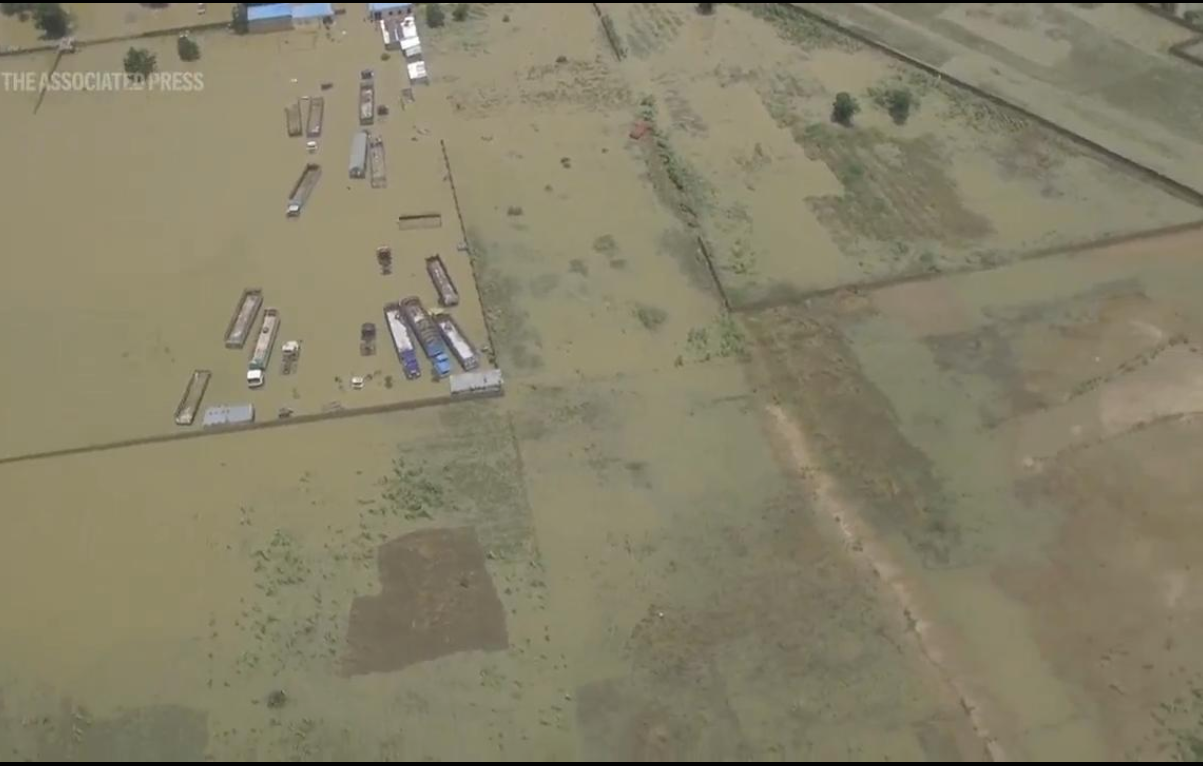
ABUJA, Nigeria (AP) — Nigeria’s government warned of possible flooding in 11 states following the release of water from a dam in neighboring Cameroon.
The Nigerian hydrological agency said on Wednesday that water would be released from the Lagdo dam gradually and could cause flooding, but that there was no cause for alarm.
Severe floods have ravaged northeastern Nigeria, impacting more than 400,000 people, according to the United Nations.
Floods in Borno state have forced people from their homes into displacement sites. Earlier this month, flooding killed 30 people in the state after the collapse of a major dam. About 15% of Maiduguri, the capital of Borno state, was under water.
The flooding has worsened the humanitarian crisis in Nigeria, where armed violence especially in the troubled northern region has already displaced millions.
West Africa has experienced some of the heaviest flooding in decades this year, affecting more than 2 million people, three times more than last year. In 2022, more than 600 people were impacted by flooding in Nigeria when water was released from the same Lagdo dam in Cameroon.