
Biden also suggested the U.S. may have to extend its presence beyond August 31 to continue evacuations. The military has evacuated 28,000 people since last weekend.
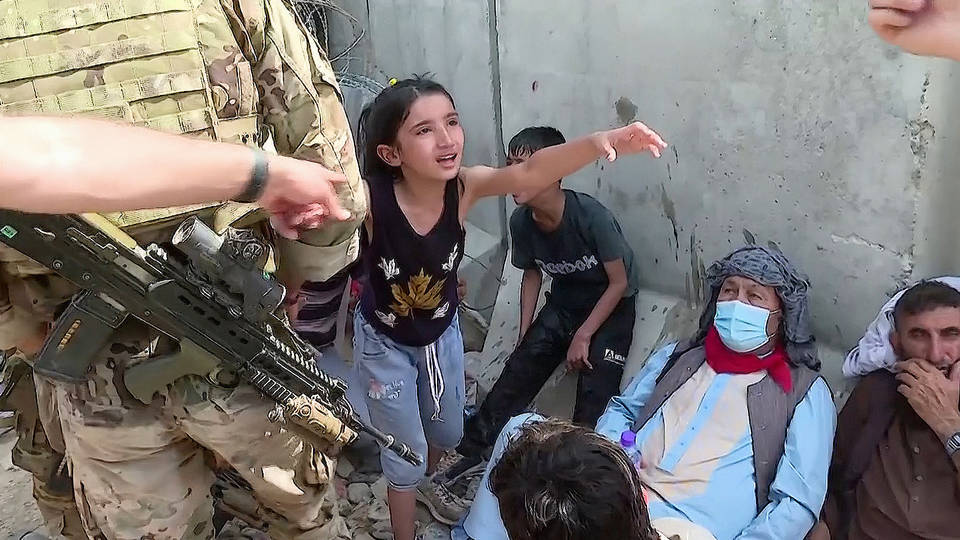
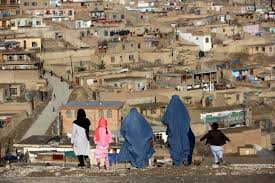
The victors in Kabul will be those who benefit from the Taliban taking power. They will also be those who benefit or cheer as the US appears humiliated.
Among those “winners” are Qatar, Russia, China, Pakistan, Turkey and Iran. This can be seen in various ways. Most of these countries hosted the Taliban or tacitly backed them. Others, such as Turkey, have sought to have a role in post-American Afghanistan.
Iran’s media is full of stories arguing that the Taliban won’t export extremism or threaten anyone and that Iran has always helped the Afghan people. Iranian official Ali Shamkhani, for instance, has put out positive statements about Iran’s role in Afghanistan.
Meanwhile, Qatar’s Al Jazeera was on hand to showcase the Taliban taking the presidential palace in Kabul. It appears Qatar had advance knowledge of the Taliban’s plans because Doha has been hosting the Taliban for years.
| Afghanistan is a win for all who wish to see the U.S. humiliated. |
Qatar has a large US military base but has always backed religious extremists, including Hamas and the Muslim Brotherhood, and has given red-carpet treatment to the Taliban. This is a big win for Qatar, and it will use it for leverage across the Middle East.
While Qatar and Turkey benefit because of their links to Islamist groups and general backing for Islamist movements, Iran benefits from seeing the US leave its doorstep. Iran also wants the US out of Iraq and will use the Afghan chaos to push it to leave Iraq as well.
Turkey will be working with Russia and Iran in Syria to try to get the US to leave. All these countries agree that they want America gone from the region.
Russia and China have both hosted Taliban delegations in recent years and months. They want to have open channels to the Taliban and consider recognizing them as the new government. This is important at the United Nations Security Council. With backing from Russia and China, the Taliban can get the international clout they need and eventually obtain wider recognition.
The meetings between Taliban officials and Russian envoys this week, which have been reported, are important.
“Russian Ambassador to Afghanistan Dmitry Zhirnov will meet on Tuesday with the coordinator of the leadership of the Taliban movement [outlawed in Russia] to discuss ensuring the security of the Russian Embassy, Russian Presidential envoy to Afghanistan Zamir Kabulov said in an interview,” Russia’s TASS news agency reported.
“Our ambassador is in contact with representatives of the Taliban leadership,” he said. “Tomorrow, as he told me just 10 minutes ago, he will meet with the coordinator from the Taliban leadership for ensuring security, including our embassy.”
The Russian ambassador will discuss with the Taliban representative the details of the external protection of the diplomatic mission of the Russian Federation, Kabulov said.
This means that Russia may consider recognizing the Taliban at a future date. Russia could help put the wind in the sails of the Taliban.
But Russia has its own background in Afghanistan. It has noted that the US-backed Afghan government has fallen quickly. Russia wants to secure Central Asia as well, including its southern flank.
That means the chaos of Afghanistan must not spread. It will want to work with China, Pakistan, Turkey and Iran to make sure that the Taliban are contained and come to power in a stable way.
All these countries have common interests. They want the US gone from the region. They want America humiliated. They also want to share energy and mineral resources that may flow through Afghanistan. This is their invitation to help make the decline of the US and the West more rapid.
These countries have different ideological agendas. Turkey, Pakistan and Qatar have an Islamist worldview of the world. They have wanted to work with Malaysia and even Iran on new concepts regarding an Islamic system of trade or television programs to confront “Islamophobia.”
Turkey and Qatar form an axis that backs the Muslim Brotherhood, and as such, there has been cheering in Syria and the Gaza Strip regarding the Taliban takeover. China and Russia have other ideas about how this may benefit them on the world stage.
For now, the Afghanistan debacle is a major setback for the US globally in terms of image and the perception that US-backed systems tend to be as weak and temporary as the grass that greens with the spring and withers in the fall.
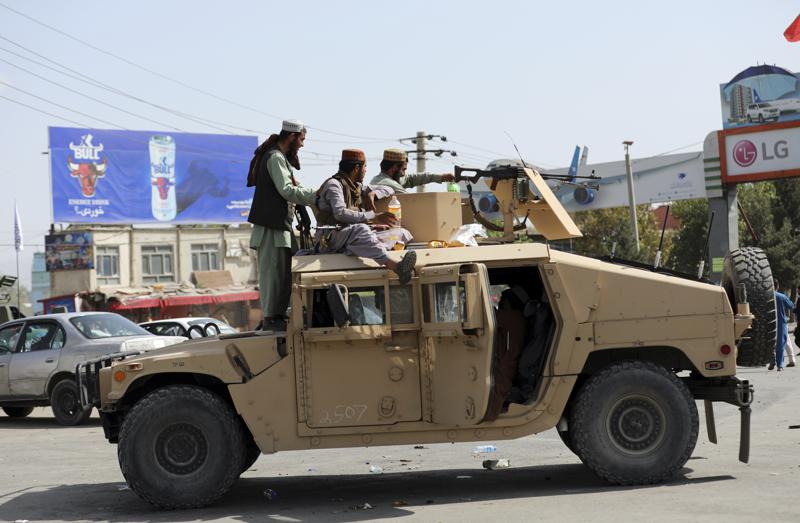
WASHINGTON (AP) — Built and trained at a two-decade cost of $83 billion, Afghan security forces collapsed so quickly and completely — in some cases without a shot fired — that the ultimate beneficiary of the American investment turned out to be the Taliban. They grabbed not only political power but also U.S.-supplied firepower — guns, ammunition, helicopters and more.
The Taliban captured an array of modern military equipment when they overran Afghan forces who failed to defend district centers. Bigger gains followed, including combat aircraft, when the Taliban rolled up provincial capitals and military bases with stunning speed, topped by capturing the biggest prize, Kabul, over the weekend.
A U.S. defense official on Monday confirmed the Taliban’s sudden accumulation of U.S.-supplied Afghan equipment is enormous. The official was not authorized to discuss the matter publicly and so spoke on condition of anonymity. The reversal is an embarrassing consequence of misjudging the viability of Afghan government forces — by the U.S. military as well as intelligence agencies — which in some cases chose to surrender their vehicles and weapons rather than fight.
The U.S. failure to produce a sustainable Afghan army and police force, and the reasons for their collapse, will be studied for years by military analysts. The basic dimensions, however, are clear and are not unlike what happened in Iraq. The forces turned out to be hollow, equipped with superior arms but largely missing the crucial ingredient of combat motivation.
“Money can’t buy will. You cannot purchase leadership,” John Kirby, chief spokesman for Defense Secretary Lloyd Austin, said Monday.
Doug Lute, a retired Army lieutenant general who help direct Afghan war strategy during the George W. Bush and Barack Obama administrations, said that what the Afghans received in tangible resources they lacked in the more important intangibles.
“The principle of war stands — moral factors dominate material factors,” he said. “Morale, discipline, leadership, unit cohesion are more decisive than numbers of forces and equipment. As outsiders in Afghanistan, we can provide materiel, but only Afghans can provide the intangible moral factors.”
By contrast, Afghanistan’s Taliban insurgents, with smaller numbers, less sophisticated weaponry and no air power, proved a superior force. U.S. intelligence agencies largely underestimated the scope of that superiority, and even after President Joe Biden announced in April he was withdrawing all U.S. troops, the intelligence agencies did not foresee a Taliban final offensive that would succeed so spectacularly.
“If we wouldn’t have used hope as a course of action, … we would have realized the rapid drawdown of U.S. forces sent a signal to the Afghan national forces that they were being abandoned,” said Chris Miller, who saw combat in Afghanistan in 2001 and was acting secretary of defense at the end of President Donald Trump’s term.
Stephen Biddle, a professor of international and public affairs at Columbia University and a former adviser to U.S. commanders in Afghanistan, said Biden’s announcement set the final collapse in motion.
“The problem of the U.S. withdrawal is that it sent a nationwide signal that the jig is up — a sudden, nationwide signal that everyone read the same way,” Biddle said. Before April, the Afghan government troops were slowly but steadily losing the war, he said. When they learned that their American partners were going home, an impulse to give up without a fight “spread like wildfire.”
The failures, however, go back much further and run much deeper. The United States tried to develop a credible Afghan defense establishment on the fly, even as it was fighting the Taliban, attempting to widen the political foundations of the government in Kabul and seeking to establish democracy in a country rife with corruption and cronyism.
Year after year, U.S. military leaders downplayed the problems and insisted success was coming. Others saw the handwriting on the wall. In 2015 a professor at the Army War College’s Strategic Studies Institute wrote about the military’s failure to learn lessons from past wars; he subtitled his book, “Why the Afghan National Security Forces Will Not Hold.”
“Regarding the future of Afghanistan, in blunt terms, the United States has been down this road at the strategic level twice before, in Vietnam and Iraq, and there is no viable rationale for why the results will be any different in Afghanistan,” Chris Mason wrote. He added, presciently: “Slow decay is inevitable, and state failure is a matter of time.”
Some elements of the Afghan army did fight hard, including commandos whose heroic efforts are yet to be fully documented. But as a whole the security forces created by the United States and its NATO allies amounted to a “house of cards” whose collapse was driven as much by failures of U.S. civilian leaders as their military partners, according to Anthony Cordesman, a longtime Afghanistan war analyst at the Center for Strategic and International Studies.
The Afghan force-building exercise was so completely dependent on American largesse that the Pentagon even paid the Afghan troops’ salaries. Too often that money, and untold amounts of fuel, were siphoned off by corrupt officers and government overseers who cooked the books, creating “ghost soldiers” to keep the misspent dollars coming.
Of the approximately $145 billion the U.S. government spent trying to rebuild Afghanistan, about $83 billion went to developing and sustaining its army and police forces, according to the Office of the Special Inspector General for Afghanistan Reconstruction, a congressionally created watchdog that has tracked the war since 2008. The $145 billion is in addition to $837 billion the United States spent fighting the war, which began with an invasion in October 2001.
The $83 billion invested in Afghan forces over 20 years is nearly double last year’s budget for the entire U.S. Marine Corps and is slightly more than what Washington budgeted last year for food stamp assistance for about 40 million Americans.
In his book, “The Afghanistan Papers,” journalist Craig Whitlock wrote that U.S. trainers tried to force Western ways on Afghan recruits and gave scant thought to whether U.S. taxpayers dollars were investing in a truly viable army.
“Given that the U.S. war strategy depended on the Afghan army’s performance, however, the Pentagon paid surprisingly little attention to the question of whether Afghans were willing to die for their government,” he wrote.
ــــ
Associated Press writers Nomaan Merchant, Lorne Cook in Brussels and James LaPorta in Boca Raton, Florida, contributed to this report.
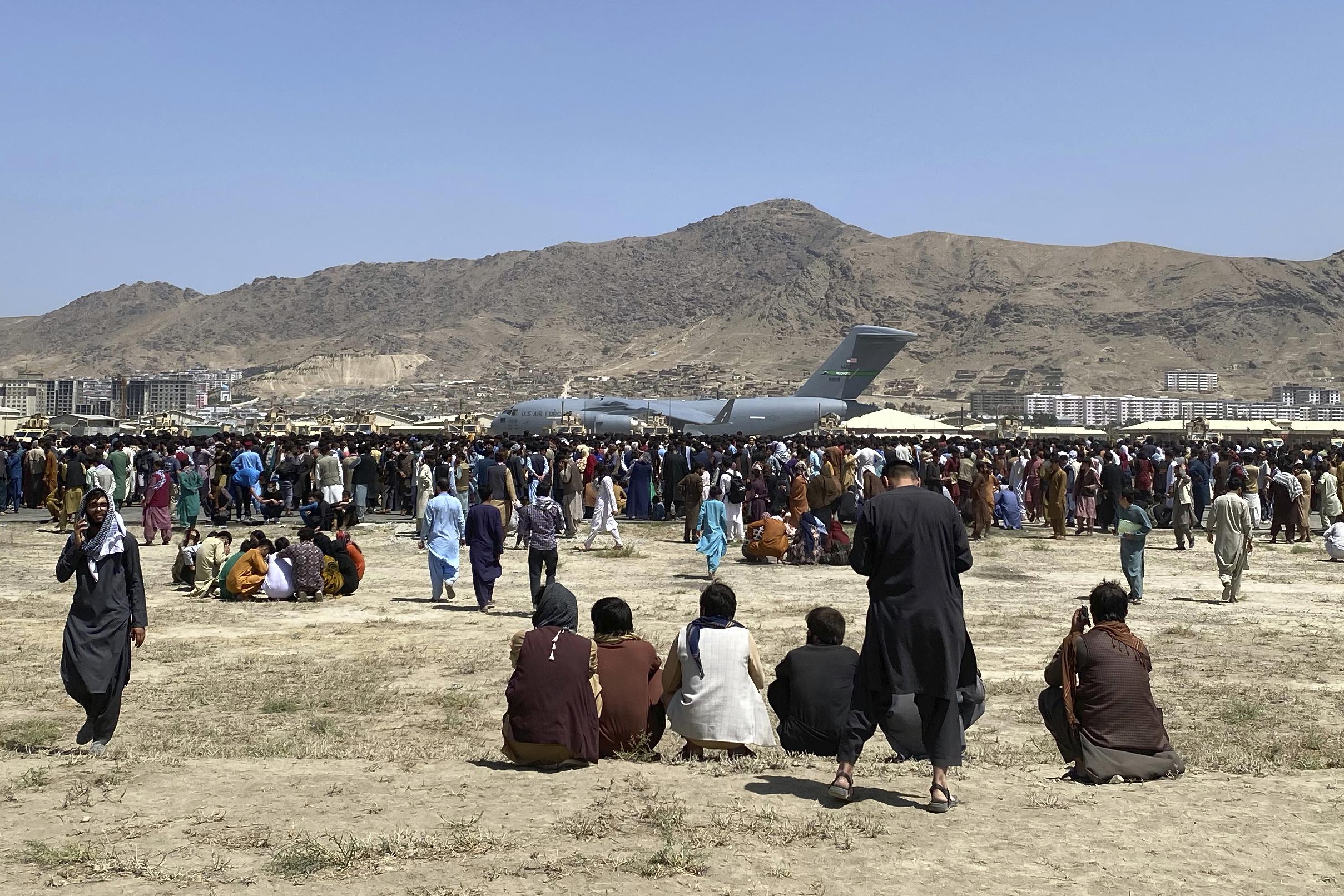
KABUL, Afghanistan (AP) — The Taliban declared an “amnesty” across Afghanistan and urged women to join their government Tuesday, seeking to convince a wary population that they have changed a day after deadly chaos gripped the main airport as desperate crowds tried to flee their rule.
Following a blitz across Afghanistan that saw many cities fall to the insurgents without a fight, the Taliban have sought to portray themselves as more moderate than when they imposed a brutal rule in the late 1990s. But many Afghans remain skeptical.
Older generations remember the Taliban’s ultraconservative Islamic views, which included severe restrictions on women as well as stonings, amputations and public executions before they were ousted by the U.S-led invasion that followed the Sept. 11, 2001, terror attacks.
While there were no major reports of abuses or fighting in the capital of Kabul as the Taliban now patrol its streets, many residents have stayed home and remain fearful after the insurgents’ takeover saw prisons emptied and armories looted. Many women have expressed dread that the two-decade Western experiment to expand their rights and remake Afghanistan would not survive the resurgent Taliban.
Germany, meanwhile, halted development aid to Afghanistan over the Taliban takeover. Such aid is a crucial source of funding for the country — and the Taliban’s efforts to project a milder version of themselves may be aimed at ensuring that money continues to flow.
The promises of amnesty from Enamullah Samangani, a member of the Taliban’s cultural commission, were the first comments on how the Taliban might govern on a national level. His remarks remained vague, however, as the Taliban are still negotiating with political leaders of the country’s fallen government and no formal handover deal has been announced.
“The Islamic Emirate of Afghanistan with full dignity and honesty has announced a complete amnesty for all Afghanistan, especially those who were with the opposition or supported the occupiers for years and recently,” he said.
Other Taliban leaders have said they won’t seek revenge on those who worked with the Afghan government or foreign countries. But some in Kabul allege Taliban fighters have lists of people who cooperated with the government and are seeking them out.
Samangani also described women as “the main victims of the more than 40 years of crisis in Afghanistan.”
“The Islamic Emirate of Afghanistan doesn’t want the women to be the victims anymore,” he said. “The Islamic Emirate of Afghanistan is ready to provide women with environment to work and study, and the presence of women in different (government) structures according to Islamic law and in accordance with our cultural values.”
That would be a marked departure from the last time the Taliban were in power, when women were largely confined to their homes. Samangani didn’t describe exactly what he meant by Islamic law, implying people already knew the rules. He added that “all sides should join” a government.
In another sign of the Taliban’s efforts to portray a new image, a female television anchor on the private broadcaster Tolo interviewed a Taliban official on camera Tuesday in a studio — an interaction that once would have been unthinkable. Meanwhile, women in hijabs demonstrated briefly in Kabul, holding signs demanding the Taliban not “eliminate women” from public life.
Rupert Colville, a spokesman for the United Nations’ high commissioner for human rights, noted both the Taliban’s vows and the fear of those now under their rule.
“Such promises will need to be honored, and for the time being — again understandably, given past history — these declarations have been greeted with some skepticism,” he said in a statement. “There have been many hard-won advances in human rights over the past two decades. The rights of all Afghans must be defended.”
Germany suspended development aid to Afghanistan, estimated at 250 million euros ($294 million) for 2021. The German news agency dpa described Afghanistan as the nation that received the most development aid from Berlin. Other funding separately goes to security services and humanitarian aid.
Swedish Development Aid Minister Per Olsson Fridh, meanwhile, said his government would slow down aid to the country in an interview with the Dagens Nyheter newspaper. But Britain committed to an increase.
British Foreign Secretary Dominic Raab said humanitarian aid could rise by 10%. He said the aid budget would be reconfigured for development and humanitarian purposes and that the Taliban would not get any money previously earmarked for security — but he said aid would not be conditioned on how the Taliban govern.
Meanwhile, Kabul’s international airport, the only way out for many, reopened to military evacuation flights under the watch of American troops.
All flights were suspended on Monday when thousands of people rushed the airport, desperate to leave the country. In shocking scenes captured on video, some clung to a plane as it took off and then fell to their deaths. At least seven people died in chaos at the airport, U.S. officials said.
Stefano Pontecorvo, NATO’s senior civilian representative to Afghanistan, posted video online Tuesday showing the runway empty with U.S. troops on the tarmac. What appeared to be a military cargo transport plane could be seen in the distance.
“I see airplanes landing and taking off,” he wrote on Twitter.
Overnight, flight-tracking data showed a U.S. military plane taking off for Qatar, home to the U.S. military Central Command’s forward headquarters. A British military cargo plane, headed to Kabul, took off from Dubai.
Still, there were indications that the situation was still tenuous. The U.S. Embassy in Kabul, now operating from the airport, urged Americans to register online for evacuations but not come to the airport before being contacted.
The German Foreign Ministry said a first German military transport plane landed in Kabul, but it could only take seven people on board before it had to depart again due to continued chaos.
Across Afghanistan, the International Committee of the Red Cross said thousands had been wounded in fighting as the Taliban swept across the country in recent days. However, in many places, security forces and politicians handed over their provinces and bases without a fight, likely fearing what would happen when the last American troops withdrew as planned at the end of the month.
A resolute U.S. President Joe Biden on Monday said he stood “squarely behind” his decision to withdraw American forces and acknowledged the “gut-wrenching” images unfolding in Kabul. Biden said he faced a choice between honoring a previously negotiated withdrawal agreement or sending thousands more troops back to begin a third decade of war.
“After 20 years, I’ve learned the hard way that there was never a good time to withdraw U.S. forces,” Biden said in a televised address from the White House.
Talks continued Tuesday between the Taliban and several Afghan government officials, including former President Hamid Karzai and Abdullah Abdullah, who once headed the country’s negotiating council. Discussions focused on how a Taliban-dominated government would operate given the changes in Afghanistan over the last 20 years, rather than just dividing up who controlled what ministries, officials with knowledge of the negotiations said. They spoke on condition of anonymity to discuss confidential details of the talks.
President Ashraf Ghani earlier fled the country amid the Taliban advance and his whereabouts remain unknown.