
By: WAgdy Abdel AZiz
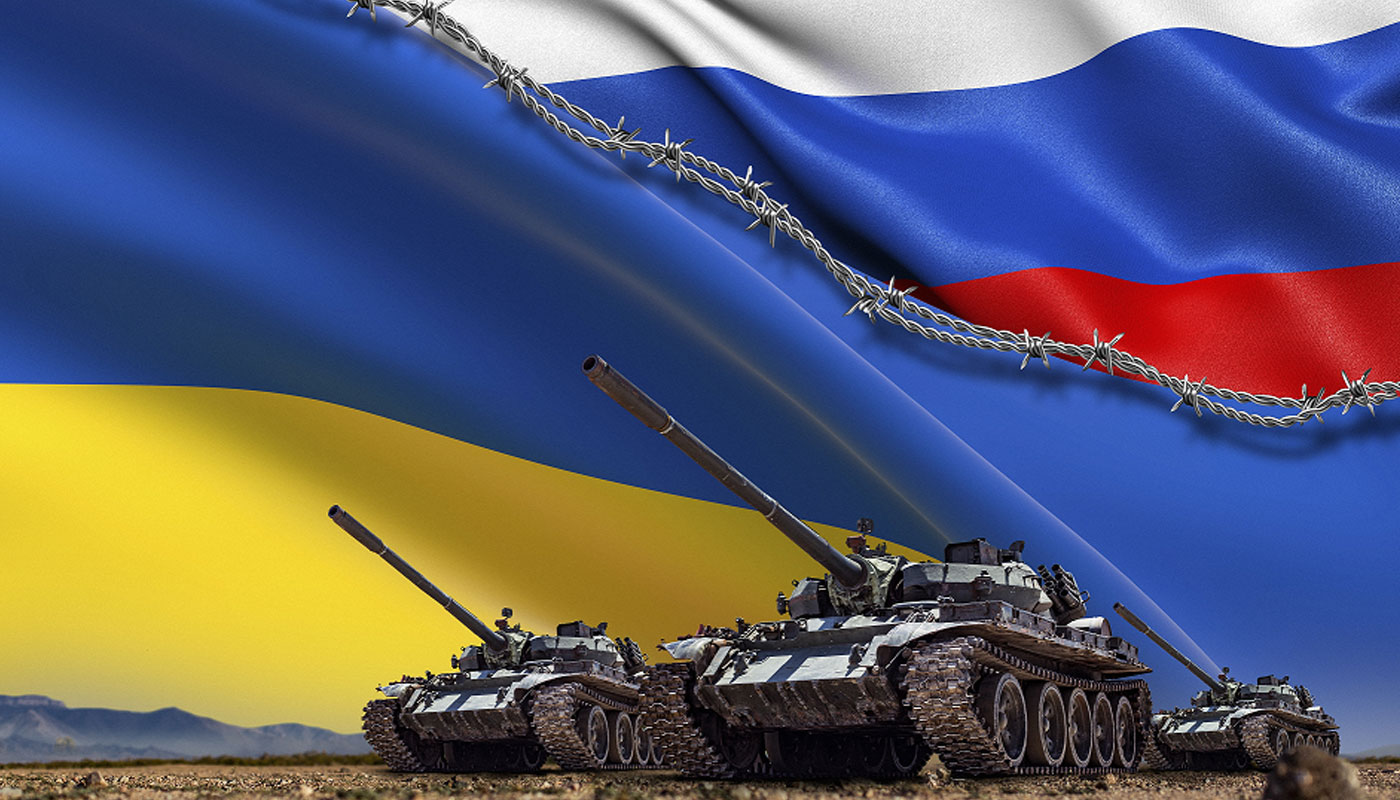
In a dramatic development reigniting tensions in Eastern Europe, the Kremlin announced today, Friday, September 12, 2025, a “temporary suspension” of communications between Russian and Ukrainian delegations in peace talks, amid mutual accusations of “lack of seriousness” from the Ukrainian side. At the same time, Russia’s Foreign Ministry revealed plans for the 13th edition of the “International Meeting of High Representatives for Security Issues” in Moscow on September 17, attended by more than 125 delegations from around 100 countries, in an effort to bolster Moscow’s influence as a global mediator amid the ongoing war since 2022. This announcement comes after weeks of military escalation, including Russian airstrikes on Poland, raising questions about whether the summit is a step toward peace or merely a diplomatic maneuver.
Talks Suspension: “Pause” Resets Eastern Front to Square One
Kremlin spokesman Dmitry Peskov confirmed in an official statement that “communications between the Russian and Ukrainian negotiating teams are currently on hold,” attributing the reason to “external interferences” from European and American countries, according to reports from Kyiv and Moscow. Peskov added that Russia remains “open to diplomatic dialogue,” but warned that “patience is wearing thin” if Kyiv continues to reject Moscow’s conditions, such as Ukraine’s neutrality and non-membership in NATO.
From its side, the Ukrainian government in Kyiv denied any responsibility for the halt, describing the Russian announcement as “a pretext for military escalation.” President Volodymyr Zelenskyy stated on X: “Russia is manipulating peace for propaganda purposes while continuing to bombard our cities.” This suspension follows the failure of previous rounds in Istanbul and Turkey, where talks stalled in March 2022 over disputes regarding Russia’s withdrawal from Donbas.
Moscow Security Summit: 100 Countries Confront the “Unipolar Order”
In a move aimed at promoting Russia as a force for multipolarity, the Russian Foreign Ministry announced that the International Meeting of High Representatives for Security Issues will bring together more than 125 delegations from approximately 100 countries, focusing on “rebuilding the global security architecture” away from “Western hegemony.” The annual event, held since 2014, will feature broad participation from African, Asian, and Latin American nations, including representatives from BRICS and the Shanghai Cooperation Organization, per ministry statements.
The agenda is expected to emphasize issues such as “regional security in Europe” and “countering terrorism,” with indirect references to the Ukraine crisis. Spokeswoman Maria Zakharova described the summit as “proof of the collapse of the Western order,” stressing that “Southern countries reject American blackmail.” However, NATO countries like Poland and France have declined participation, viewing the event as a “Kremlin propaganda platform.”
International Reactions: From Welcome to Warnings
Countries like China and India welcomed the summit as an opportunity for “multilateral dialogue,” while U.S. President Donald Trump warned that “our patience with Putin is running out quickly,” alluding to the need for “military pressure” on Moscow. In Europe, French President Emmanuel Macron reaffirmed solidarity with Poland after a recent Russian raid, calling for a “decisive NATO response.”
On X, the posts sparked heated debate, with Ukrainian activists calling for an “immediate halt to the killing” and Russian accusations that “the West is obstructing peace.” Analysts see the suspension and summit as Russia’s attempt to regain the initiative ahead of winter, anticipating military escalation in Donbas.
As the summit approaches, eyes are on whether it will bridge the gap for resuming talks or serve as a show of strength.
NATO
Sahar Ragab – Ahmed Bahgat
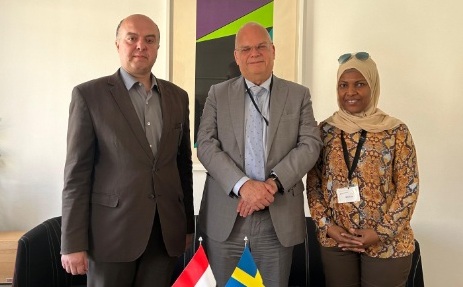
In a candid interview with “Africaface” the Swedish Ambassador to Cairo, Dag Jolin Dannefeldt, made important statements about the situation in Gaza, the future of the two-state solution, and his country’s positions on Israel, Russia, and China.
Dannefeldt did not mince words, but spoke clearly about Sweden’s readiness to arrest Netanyahu if he entered its territory, stressing that what is happening in Gaza constitutes “serious violations of international law.” He also emphasized that the two-state solution is “far from being achieved,” given the Palestinian division and Israeli intransigence.
The interview extended to cover regional and international issues, from Sweden’s economic partnership with Egypt to climate change, the refugee issue, the conflict in Sudan, and crises in the international system, in a conversation characterized by clarity and openness. Here is the text of the interview:
*How do you evaluate the Egyptian-Swedish Economic Forum?
Relations between Egypt and Sweden are excellent in all aspects. They are harmonious and very attractive. Trade is a cornerstone. We are pleased to see that we have approximately 25 Swedish companies active in Egypt with significant investments. The forum was an opportunity to learn about investment opportunities and deepen discussions between Egyptian and Swedish companies.
*Is there a strategic dialogue between Sweden and Egypt, for example, on political or regional issues?
-Of course, there is a strategic dialogue that I oversee in my capacity as ambassador to Egypt. As a member state of the European Union, which has elevated relations with Egypt to the strategic level, there is a strategic partnership. We are aware of the EU standards and are completely satisfied with them. We support strengthening strong relations that will increase the number and contribution of Swedish businesspeople. Sweden voted in favor of approving financial support to Egypt. Sweden is also interested in supporting Egypt in combating irregular migration in accordance with the rules of the Schengen Area. We hope to strengthen bilateral relations through increased official visits in the near future.
The Aggression on the Gaza Strip
* How can we stop the Israeli killing machine against civilians in the Gaza Strip?
If I knew how to stop it, I would have said so. But what is happening in Gaza, as you see in the newspapers daily, is causing growing international outrage. My Foreign Minister and Prime Minister have made it clear that what the Israelis are doing to civilians in Gaza violates international law and international humanitarian law. Sweden remains one of the largest humanitarian donors to Gaza, so Gaza was one of the topics raised during the visit of the Minister of Trade and the International Development Association two days ago. We look forward to the UN conference in June on the two-state solution, hoping to move things in a positive direction.
*Does Sweden support the prosecution of Israeli leaders?
-We have signed the Rome Statute establishing the International Criminal Court, so we are committed to implementing the arrest warrant for Israeli Prime Minister Benjamin Netanyahu if he arrives on Swedish soil. Unlike what happened when he went to Hungary a while ago, the Swedish police would arrest him. There are no exceptions. We abide by the law. The number of victims has now reached 50,000 or 60,000, and that is a high enough number. It is strange that Israel allows itself to do this.
We are following the demonstrations in Europe and the Arab world, and we are also witnessing demonstrations in Israel by citizens who strongly oppose what is happening in Gaza. So, it’s not just the Arabs or the Europeans; the Israelis are perhaps the most important player. We also have a strong disagreement with the Tel Aviv government, so no one should forget that. Israel is a democratic state with freedom of expression, freedom of religion, and so on, and its people are demonstrating massively against it.
*You mentioned the two-state solution conference in New York in June, the result of cooperation between France and Saudi Arabia. Do you believe that a two-state solution is now possible?
-We support the two-state solution as declared in the Arab Peace Initiative, and this is the official Swedish position. Unfortunately, we are very far from a two-state solution. To achieve peace, there must be two partners: the Israeli government, and then you have the second partner, represented by two parties in Palestine: the Palestinian Authority, Fatah, which wants peace and participates in peace, and then you have Hamas, which does not want peace and wants war.
This is something we must never forget: what we are witnessing in Gaza now began because of an attack launched by Hamas on Israeli territory. Israel defended itself, and in its defense, it far exceeded what is permitted by international humanitarian law and did not observe the principle of proportionality. Israel is a state, and since it is bound by international law, it has the right to defend itself within the limits of international law. This principle of proportionality is the reason why the International Criminal Court has indicted Benjamin Netanyahu on suspicion of war crimes.
At the same time, Sweden recognizes the State of Israel within the 1967 borders. As you know, Sweden was the first country in Western Europe to recognize the State of Palestine. We recognize the State of Palestine within the 1967 borders, and we do not recognize the Israeli presence in the West Bank, the settlements, East Jerusalem, or Gaza. Sweden has been working diligently for a two-state solution since 1947. As you know, the first UN peace mediator was Count Folke Bernadotte, the uncle of Swedish President Kirch, who was assassinated by the Stern Gang.
In 1947, when Count Bernadotte was killed, the ancestors of the current settlers were fanatical believers in the same way that Hamas is a fanatical organization. Moderate views in the State of Israel are represented by the Labor and Meretz parties, which no longer exist. The Labor Party has the minimum now.
*Is there a pro-peace constituency in Israel now?
-I don’t think so. I served there in the 1990s when the Oslo process was ongoing. I served when Ehud Barak was prime minister, and so there was certainly a strong pro-peace constituency in Israel. Is there still a pro-peace constituency? I don’t know, but Israel has changed, and so have the Palestinians.
*I appreciate your language and your words, but if you look back at the history of the Jewish crisis, it was a crisis after World War II, so it was a European crisis. So you exported that problem to the Arab region?
-I can’t say that Sweden exported the problem, and you’re absolutely right when you say that Jews were persecuted in Europe, not in the Islamic world.
Syrians in Sweden
* How will you deal with the large number of Syrian refugees? Will you push them to return to Syria?
– About 3% of Sweden’s population is of Syrian origin, most of whom are refugees who acquired citizenship over time and are now citizens with the right to remain. Swedish citizens cannot be expelled from their country, and we do not have a policy of forced deportation.
Sweden and NATO
*What has Sweden gained from joining NATO?
– Strengthened security. We are very afraid of Russia, which is acting very aggressively in our region. Not only did they violently and completely illegally attack Ukraine, but they also used brute force. Since President Vladimir Putin took power, they have been acting unilaterally, using means to harass and destroy Swedish, Finnish, and other facilities.
Therefore, following Russia’s violent attack on Ukraine on February 22, 2022, Sweden, along with Finland, decided to apply to join NATO. Although Sweden has been pursuing a policy of non-alignment, we have never hidden the fact that we are economically part of a market economy and trade with the United States and Europe. This relationship was further strengthened by our accession to the European Union in 1995.
* There are voices within Europe criticizing the support provided to Ukraine. How do you deal with these voices?
– We are dealing with the matter through the European Union mechanism. As far as I know, only Hungary and Slovakia are opposing Ukraine, and the matter is up to the EU summit in Brussels. They have tried to isolate Hungary, and it is impossible for Europeans to understand how a country like Hungary, which was long occupied by the Soviet Union, could support Russian aggression. I don’t understand that. The European Union, its 25 member states, are all united behind a strong condemnation of Russian aggression. What Hungary and Slovakia are doing is up to them to decide, but we strongly disagree with their position, and it is difficult to understand.
* Does this mean that you—I mean the European Union—don’t want peace with Russia?
– Russia has invaded a foreign country. If Russia wants peace, it must withdraw from the territories it has occupied, and then peace will come. We can even have peace tomorrow if Russia withdraws from the Ukrainian regions it has occupied and stolen. I am for Ukraine to be free from any hegemony, and international law must be adhered to, which is the cornerstone of Swedish and European foreign policy.
*How do you view China’s role on the international stage? Do you support confrontation or cooperation with it?
– Sweden does not seek confrontation with any country, but rather seeks cooperation with everyone, although we know that China, in some aspects, behaves in a manner that leads us to believe it does not adhere to the principles of international law.
*How do you view the US tariffs?
-We are strongly against them. Sweden is a free trade country, and we believe in them. Measures based on a firm belief that globalization and trade benefit everyone, therefore we strongly disagree with the law that focuses on increasing tariffs.
*How do you see the effects of these tariffs?
-Ultimately, we will have a world with lower and slower economic growth, and my country depends on its trade. We abolished all trade barriers long ago. We joined the European Union in the name of free trade. Swedish companies—and Sweden as a country—have benefited enormously from free trade. At the same time, we will suffer if barriers to free trade are placed. We are very concerned about what appears to be an escalation of protectionist measures by various countries.
*As you know, some experts and intellectuals are talking about a new world order. For example, there are voices calling for reform of the UN Security Council. How do you view this? Do you support a permanent seat on the Security Council for the African continent? Sweden has long been a proponent of UN reform. We support the principle of expansion, which would make the Security Council more representative of current international affairs.
*Do you think the current international system is effective?
– Of course not. I see wars escalating toward all-out wars. Just look to the south, to southern Egypt, to Sudan. In Sudan, there is a shameful conflict. The conflict between Israel and Palestine arose after World War II as a result of Jewish immigration to Palestine.
All conflicts are irresponsible in some ways, to some extent. But what is happening in Sudan is recklessness on the borders of a country that was in excellent shape, torn apart by two men, both with personal ambitions. I think this is catastrophic.
*Are you satisfied with the international efforts made so far to confront the threat of climate change?
No, I believe the threat of climate change is growing more dangerous by the day. Sweden is one of the countries that takes this threat seriously, and Swedish industry is taking this matter seriously and is trying to mitigate it and reduce emissions.
I believe that Swedish industry is the most, perhaps the most climate-conscious, industry in the world. However, Sweden, as a country, is at the forefront of efforts to reduce emissions and enact international laws that are binding on all. But now, as you know, in Sweden, Scandinavia, and Northern Europe, climate change has already exceeded two degrees. Indeed, in Sweden, Norway, and Finland today, we are about two and a half degrees warmer than pre-industrial times. Climate change is manifesting itself in the Northern Hemisphere in a very significant way; winter is no longer winter.
Our country has been a strong presence in the international climate movement. The first climate conference was held in Stockholm in 1972. It was the first UN conference, the result of intense pressure from Swedish voters on the government to take action against pollution, because we were polluting our lakes and rivers, and our forests were dying.
This was manifested in strong and significant demands from political parties for change. Consequently, the parties that formed the government at the time, the Social Democratic Party, launched international initiatives to establish the first UN Climate Change Conference, which led to the birth of the UN Environment Programme, now hosted by lobby groups in Kenya. Since then, we have been very assertive. We introduced legislation. As you know, when Sweden joined the European Union in 1995, in the negotiations leading up to our accession, the EU wanted us. They considered our environmental laws an obstacle to trade and wanted us to abolish them. During the negotiation process, the EU gradually realized that the opposite was true.
We must strive to reach Sweden’s level of environmental protection, and that is what is happening now. But what has this led to? Has it saved the world? No, he didn’t. Europe is working hard to achieve the so-called European Union 54-55 emissions reduction program, but it’s still not enough. We must have a global problem, so there must be global support. China, the largest emitter alongside the United States, has also significantly reduced its emissions, and the Chinese are doing the same, but not the Americans.
I’m very worried about my daughters and grandchildren, because if this continues, the Earth will end. We take climate change seriously, as well as the loss of biodiversity. I was born in 1960, and now I see 70% of all living things, whether flowers, vegetables, or animals, dead or extinct.
* Are you an optimist about the future?
– I was born an optimist, but the prospects seem bleaker than at any time in my lifetime. I mean, those who lived through World War II would probably describe the world as being on the verge of total collapse.
I belong to the post-World War II generation, and I have never seen a situation as critical as it is now. The main reason is not only the ongoing wars, but also climate change and the failure to prioritize confronting it, which requires global action, and we are not doing that. Also, the greed that you see in individuals is difficult to understand.
Wagdy Abdel aziz
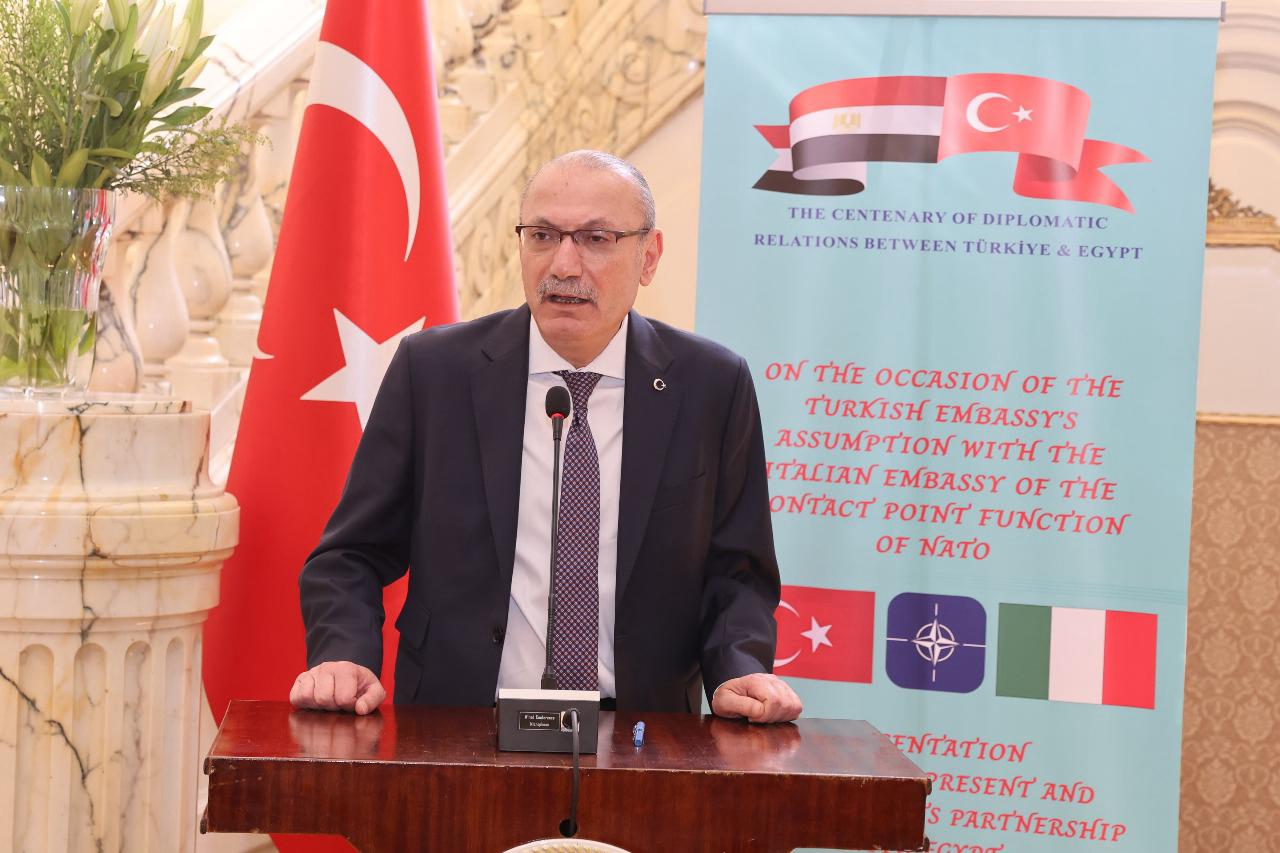
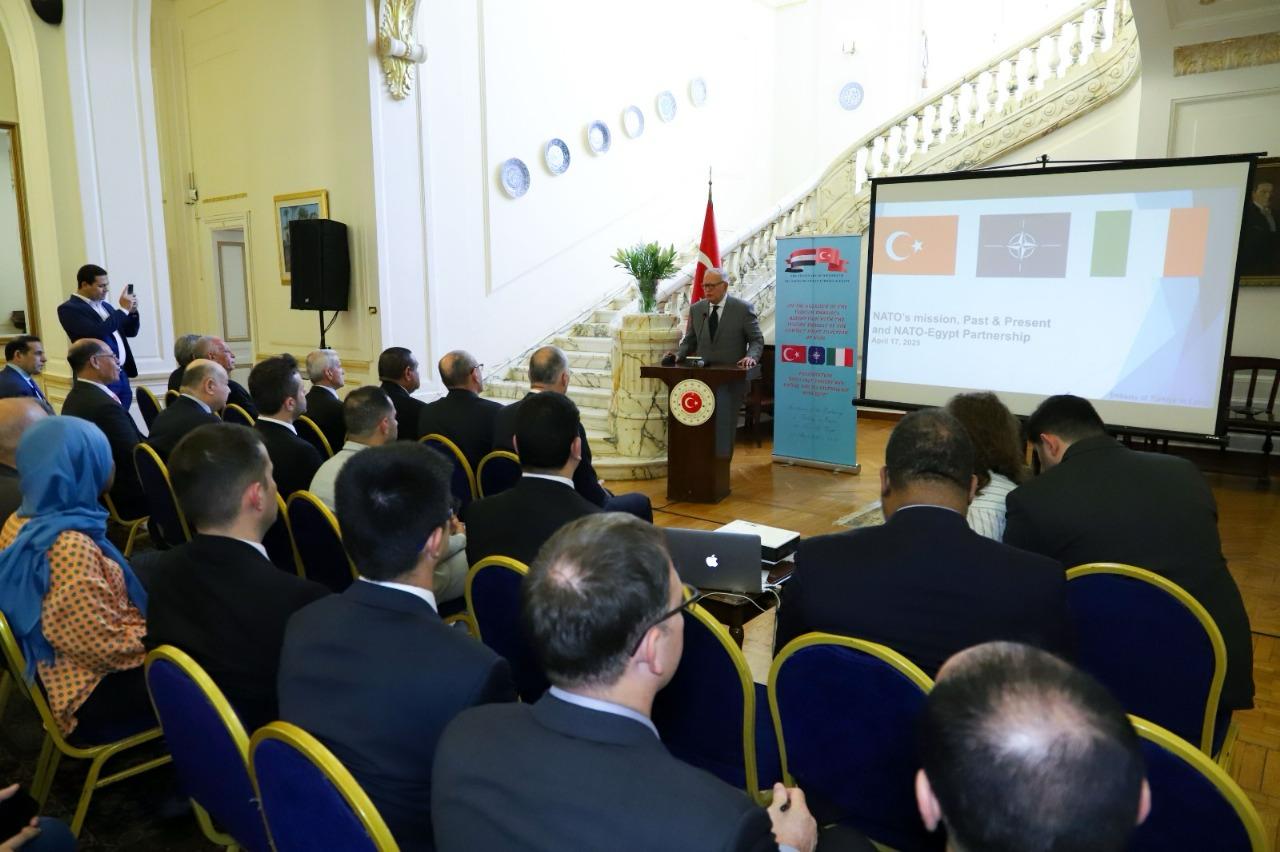
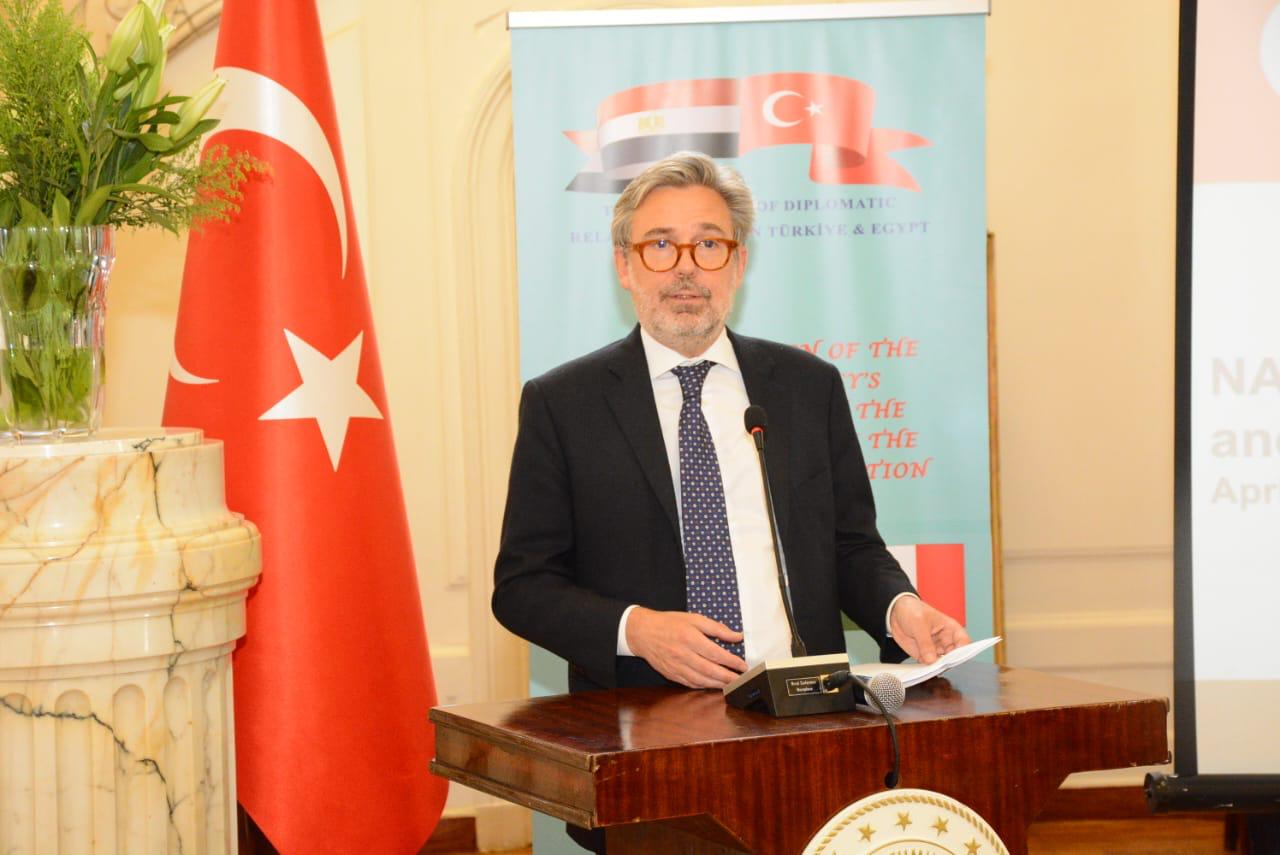
Today, the Embassy of the Republic of Turkey in Cairo, which serves as NATO’s contact point in Egypt in conjunction with the Italian Embassy, gave a presentation on the NATO Secretariat and opportunities for cooperation between Egypt and NATO.
Turkish Ambassador to Cairo, Salih Mutlu Şen, highlighted the role the Turkish Embassy will play in facilitating cooperation and communication between NATO and Egypt. The Turkish Embassy in Cairo and the Italian Embassy in Cairo have been tasked with supporting NATO’s relations with Egypt, with which it has a partnership, in 2025 and 2026. As part of the two countries’ joint mission as contact point, the Turkish Embassy will serve as the lead country in 2025, and Italy will serve as the lead country in 2026.
In this context, the Turkish Embassy in Cairo will play a leading role in 2025 by coordinating with the Italian Embassy to support NATO-Egypt relations and contribute to public relations.
During the ceremony, held at the Ambassador’s residence, information was provided about NATO’s mission, past and current activities, and cooperation between NATO and Egypt.
The event also highlighted Turkey’s NATO membership from a historical perspective.
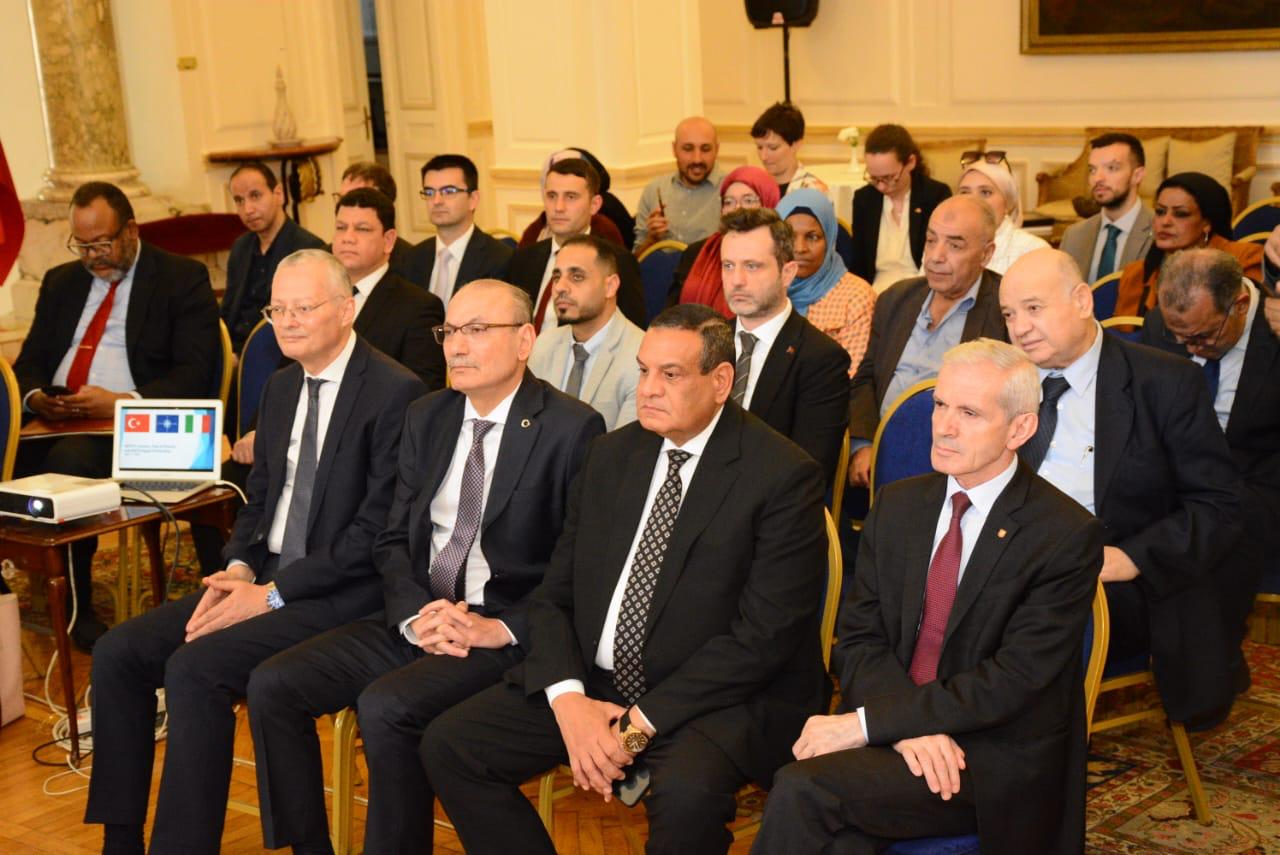
The event was attended by Ambassador Mohamed Orabi, Chairman of the Egyptian Foreign Affairs Council, retired ambassadors, academics, journalists, and writers. Information was provided about potential cooperation projects with NATO. Information was also shared about the NATO Southern Neighbors Action Plan, adopted at the NATO Summit in Washington in 2024. The NATO Secretariat also provided information about NATO-Egypt relations, projects, and potential cooperation with NATO.
This event comes on the heels of the 2024 Washington Summit, and NATO Secretary General Javier Colomina was appointed NATO Secretary General’s Representative for the Southern Neighborhood. Colomina visited Egypt on September 19 to gather information on and contribute to NATO’s activities in 2025 and 2026.
Turkish Ambassador Salih Mutlu Şen attended the meetings held at NATO Headquarters in Brussels last January, accompanied by his counterpart, Italian Ambassador to Cairo Michele Quaroni.
Turkish Ambassador Salih Mutlu Şen and Italian Ambassador to Cairo Michele Quaroni delivered speeches at the ceremony.
NATO Secretary General Mark Rutte addressed the participants and shared his views and assessments on developments in the NATO area and surrounding regions around the world.
In this context, the Turkish Embassy in Cairo continues to organize numerous events to strengthen Turkish-Egyptian relations on the occasion of the 100th anniversary of Turkish-Egyptian relations. This event was also held at the embassy’s residence in Cairo as part of the centennial celebrations.
Foreign leaders arrive in Ukraine in show of support on war’s third anniversary
Muuhamad Yehia
A dozen leaders from Europe and Canada were in Ukraine’s capital Monday to show their support on the third anniversary of Russia’s full-scale invasion.
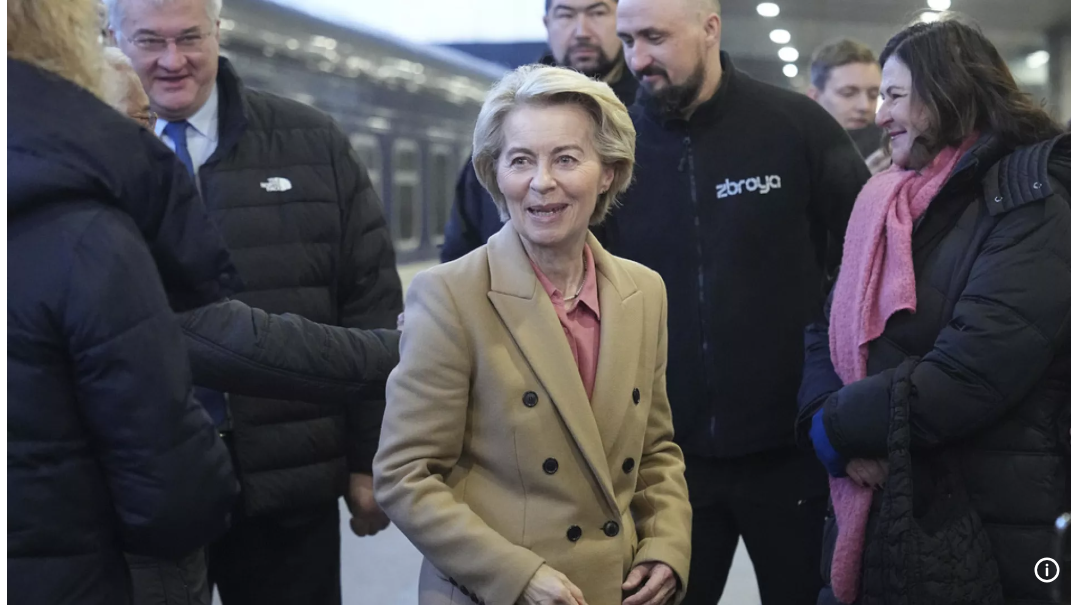
European leaders, including EU Commission President Ursula Von Der Leyen, arrived in Kyiv on Monday, to show their support on the third anniversary of Russia’s invasion full-scale invasion of Ukraine.
They and several world leaders, including Canadian Prime Minister Justin Trudeau and Spanish Prime Minister President Pedro Sánchez, were greeted at the Ukranian capital’s train station by Ukrainian Foreign Minister Andrii Sybiha and the president’s chief of staff, Andrii Yermak.
In a post on X, von der Leyen wrote that Europe was in Kyiv “because Ukraine is in Europe.”
“In this fight for survival, it is not only the destiny of Ukraine that is at stake. It’s Europe’s destiny,” she added
The leaders of the 27 European Union countries will have an emergency summit on March 6 about the next steps for Ukraine and Europe’s security. European Council President Antonio Costa announced Sunday that he will convene the summit in Brussels.
Since the EU leaders last met on 3 February, the Trump administration has upended years of US support for Ukraine and decades of commitment to defending European allies.
In a series of unwelcome developments for Kyiv, Trump has called Zelenskyy a dictator and suggested Ukraine is to blame for starting the war, while also ending Putin’s three-year diplomatic isolation by the United States
US officials, such as US Secretary of State Pete Hegseth, have indicated to Ukraine that hopes of it joining NATO and any return to its pre-2014 borders would be unrealistic.
US Vice President JD Vance to speak with Zelenskyy at Munich Security Conference
Muhamad Yehia
JD Vance and Marco Rubio are set to speak with Zelenskyy on the sidelines of the Munich Security conference. They are expected to discuss Donald Trump’s push for Ukraine and Russia to begin negotiations
US Vice President JD Vance landed in Munich on Thursday, where he is set to hold critical talks with Ukrainian President Volodymyr Zelenskyy about Russia’s nearly three-year war on Ukraine.
Vance, along with Secretary of State Marco Rubio, is due to sit down Friday with Zelenskyy on the sidelines of the Munich Security Conference. They are expected to discuss President Donald Trump’s intensifying push for Ukraine and Russia to begin negotiations to end Europe’s deadliest conflict since World War II.
Vance, like Trump, has been a sharp critic of US allies’ defence spending, which the US administration considers too little.
“The Trump administration has been clear that we care a lot about Europe,” Vance said during a meeting this week with European Commission President Ursula von der Leyen. “But we also want to make sure that we’re engaged in a security partnership that’s both good for Europe and the United States
Trump on Wednesday spoke separately with Russian President Vladimir Putin and Zelenskyy. Trump said that he and Putin agreed it was time to “start negotiations immediately” to end the war.
Trump’s call with Putin came just hours after US Defence Secretary Pete Hegseth said that NATO membership for Ukraine was unrealistic, and suggested Kyiv should abandon hopes of gaining back the territory it had lost to Russia since 2014. He said Ukraine should instead prepare for a negotiated peace settlement that will be be backed up by international peacekeeping troops.
Besides his talks with Zelenskyy, Vance is scheduled to deliver an address on Friday to the annual Munich Security Conference
The war in Europe and NATO members’ defence spending are expected to be a major topic for world leaders gathering in Munich.
Ahead of the talks, Vance visited the Dachau concentration camp memorial, a powerful reminder of the Nazis’ World War II-era atrocities and the US and Western allies’ slowness to take decisive action to confront Adolf Hitler and the rise of his violent nationalist ideology.
Dachau was established in 1933, the year Hitler took power, as one of the first concentration camps. More than 200,000 people from across Europe were held at the camp, and more than 40,000 prisoners died there in horrendous conditions. US soldiers completed the liberation on April 29, 1945.
Greenland is covered by collective security of NATO, says Finnish foreign minister
Muhamad Yehia
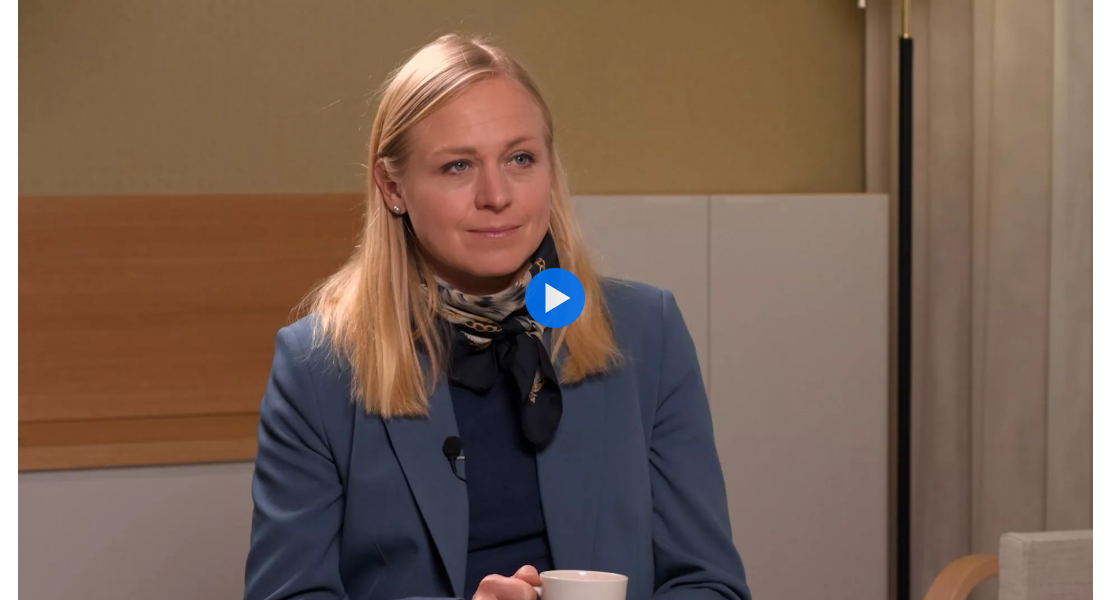
Finland’s foreign minister Elina Valtonen says Greenland is protected by Article 5 of NATO.
Greenland is protected by NATO’s Article 5 which invokes mutual defence in the case of any armed attack or invasion, the Finnish foreign minister has said.
According to Elina Valtonen, Article 5 is extended to Greenland as an autonomous territory of Denmark, a NATO member.
When asked to confirm whether Denmark provides cover for Greenland, she responded, “Precisely.”
“It’s a good thing also that Greenland is part of Denmark and Denmark is in NATO,” Valtonen told Euronews’ The Europe Conversation
Article 5 — a provision stating an attack on one is an attack on all — is the cornerstone of NATO’s allied defence pact.
The issue arose after US President Donald Trump recently reignited a call from his first administration to take over Greenland to shore up American power in the Arctic Sea.
He also wanted to take over the Panama Canal and turn Canada into the 51st US state.
When asked if he’d refrain from taking Greenland or Panama by force, he responded, “No, I can’t assure you on either of those two.”
However, Minister Valtonen said she believes Trump’s vocal demands about obtaining Greenland, the Panama Canal and Canada must be “distinguished” from his true intentions.
“With Trump, you have to distinguish between his way of speaking and also his true intentions,” she said. “The Arctic is becoming ever so important. So as an alliance, we should also be paying so much more focus on Arctic security.”
Due to global warming, the ice caps in the Arctic are melting, creating new sea routes opening up for large vessels and shortening navigation times. Greenland also has a supply of rare minerals, oil and gas
China and Russia have already expanded their presence there, and the US has a presence but is eager to expand its foothold.
Meanwhile, Finnish authorities are continuing investigations into a seized oil tanker, the Eagle S, which is alleged to be part of Russia’s shadow fleet and potentially responsible for damage to undersea communications cables.
Finland is responding robustly to attacks from Russia as part of its hybrid war against Western targets, which includes sabotaging of critical infrastructure, harmful disinformation, cyber-attacks and GPS jamming, which authorities say are tactics deployed to enable a shadow fleet of fuel transporters to avoid detection.
“This is not just the Finnish problem,” said Valtonen.
Last week, Finnish President Alexander Stubb launched “Baltic Sentry” with Baltic Sea neighbours and NATO. It commits the allies in the Baltic Sea to heightened infrastructure security and surveillance in response to hybrid war threats.
“Quite many of the damages we’ve experienced over the course of the past I’d say 18 months in the Baltic Sea area have been influencing directly several coastal states,” said Valtonen.
“The shadow fleet is essentially responsible for transporting illegal oil … So it is responsible for funding Russia’s war of aggression in Ukraine,” she explained.