
UN
The U.N. Security Council on Monday approved its first resolution endorsing a cease-fire plan aimed at ending the eight-month war between Israel and Hamas in Gaza.
The U.S.-sponsored resolution welcomes a cease-fire proposal announced by President Joe Biden that the United States says Israel has accepted. It calls on the militant Palestinian group Hamas, which initially said it viewed the proposal “positively,” to accept the three-phase plan.
Hamas responded to the adoption by saying it welcomed the resolution and was ready to work with mediators in indirect negotiations with Israel to implement it.
The statement was among the strongest from Hamas to date but stressed the group would continue “our struggle” to end the Israeli occupation and work on setting up a “fully sovereign” Palestinian state.
The resolution — which was approved overwhelmingly with 14 of the 15 Security Council members voting in favor and Russia abstaining — calls on Israel and Hamas “to fully implement its terms without delay and without condition.”
U.S. Ambassdador Linda Thomas-Greenfield said after the vote the council “sent a clear message to Hamas to accept the cease-fire deal on the table,” reiterating that Israel has accepted the deal which is supported by countries across the world.
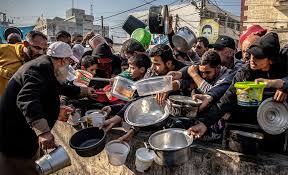
United Nations agencies warned Wednesday that over 1 million Palestinians in Gaza could experience the highest level of starvation by the middle of next month if hostilities continue.
The World Food Program and the Food and Agriculture Organization said in a joint report that hunger is worsening because of heavy restrictions on humanitarian access and the collapse of the local food system in the nearly eight-month Israel-Hamas war.
It says the situation remains dire in northern Gaza, which has been surrounded and largely isolated by Israeli troops for months. Israel recently opened land crossings in the north but they are only able to facilitate truck loads in the dozens each day for hundreds of thousands of people.
Israel’s incursion into Rafah has meanwhile severely disrupted aid operations in the south. Egypt has refused to open its Rafah crossing with Gaza since Israeli forces seized the Gaza side of it nearly a month ago, instead diverting aid to Israel’s Kerem Shalom crossing nearby.
The Israeli military says it has allowed hundreds of trucks to enter through Kerem Shalom in recent weeks, but the U.N. says it is often unable to retrieve the aid because of the security situation. It says distribution within Gaza is also severely hampered by ongoing fighting, the breakdown of law and order, and other Israeli restrictions.
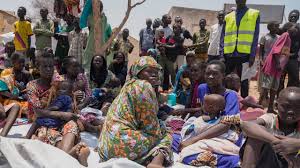
The number of internally displaced people in Sudan has reached more than 10 million as war drives about a quarter of the population from their homes, the U.N. migration agency told The Associated Press on Monday.
More than 2 million other people have been driven abroad, mostly to neighboring Chad, South Sudan and Egypt, International Organization for Migration spokesman Mohammedali Abunajela said. The IOM said the internally displaced include 2.8 million who fled their homes before the current war began.
“Imagine a city the size of London being displaced. That’s what it’s like, but it’s happening with the constant threat of crossfire, with famine, disease and brutal ethnic and gender-based violence,” IOM Director-General Amy Pope said in a statement.
Sudan’s latest conflict began in April last year when soaring tensions between the leaders of the military and the paramilitary Rapid Support Forces exploded into open fighting in the capital, Khartoum, and elsewhere in the country.
The war has wrecked Sudan, killing more than 14,000 people and wounding thousands of others, while pushing its population to the brink of famine.
Last month, the U.N. food agency warned the warring parties that there is a serious risk of widespread starvation and death in the vast western region of Darfur and elsewhere in Sudan if they don’t allow in humanitarian aid.
Pope called for a unified response from the international community, saying less than one-fifth of the funds the IOM has sought for the response have been delivered.
Together, the number of refugees and internally displaced means that more than a quarter of Sudan’s population of 47 million has fled.
Heba Saleh in Sharm al-Sheikh
Miles of newly planted palm trees adorn the main avenues of Sharm el-Sheikh, the Egyptian Red Sea resort hosting the UN global climate conference known as COP27, which started on Sunday. Sharm el-Sheikh is a sprawling town made up almost entirely of hotels built for mass tourism and serviced by cheap charter flights. But the authorities have tried to shore up its green credentials ahead of the gathering — one of biggest events on the international calendar, drawing dozens of world leaders and thousands of politicians, bankers, climate scientists and activists. A new solar energy plant was inaugurated in the resort in October, and a fleet of electric buses has been launched. For Egypt, a country grappling with a faltering economy and facing frequent criticism over its human rights record, hosting COP27 is an opportunity to project influence, attract investment, and promote itself as a regional leader. While the government eyes political and economic gains, Egyptian environmental activists, who operate under restrictive laws that govern civil society, are also hoping the event will help “mainstream” climate concerns and convince the authorities to allow them more space.
The conference has been described by its Egyptian hosts as “the African COP” — and one focused on implementation. The Cairo government will preside over crucial international negotiations and has made clear it will stress the interests of Africa and of the developing world. It wants the focus to be on promises made since the 2015 Paris accord — and on securing the funds needed to help the most vulnerable countries reduce emissions and adapt to climate change. “Egypt has a leadership position in the African continent and the Arab world,” said Sameh Shoukry, the foreign minister and president of COP27 ahead of the meeting. “We’ve been focused on implementation, and we’ve geared our message to implementation. Paris and Glasgow [COP26] finalised the road map of ambition, but it is Sharm el-Sheikh which should be the implementation of all those commitments.”
He points out that rich countries, which account for most carbon emissions, have been slow at fulfilling pledges to fund adaptation measures in poor countries, where the damaging impact of climate change is already being felt. “Adaptation has never been taken as seriously as it should,” argues Mahmoud Mohieldin, a former Egyptian investment minister chosen by Cairo to be its UN high-level champion for climate action. A former senior vice-president of the World Bank and previously Egyptian investment minister, he is charged with marshalling support from businesses and other non-governmental actors to tackle and help remedy climate change.
Mohieldin says: “I have a very simple — call it naive — metric. Does it have financial funding or not? OK, you can talk about it, you can have conferences about it, you can write volumes about it, but it doesn’t have adequate funding.” He notes that the $100bn a year pledged by the developing world to help poorer countries adapt to climate change has never been paid in full. Even if this were delivered, “this is not going to be covering more than 3 per cent of the total gap of funding for climate action,” he points out.
Cairo also wants to attract investment to a set of green projects in renewable energy, water and food that it will promote at the conference. Rania al-Mashat, minister of international co-operation, says the country has made climate action a central “part of the conversation” with donors and businesses.
The aim, she says, is to mobilise funding and expertise from a range of sources, including multilateral organisations and to “crowd in private sector finance”. The projects include $10bn of investment to replace fossil fuel power stations with renewable energy, about $3.5bn in schemes to help small farmers deal with soil salinity, desertification and rising temperatures, and a further $1.5bn committed to other desalination and irrigation schemes. The UN said last month that, along with partner organisations, it would provide Egypt $2bn in loans to boost food security.
Egyptian environmentalists hope the attention surrounding the conference will help place climate concerns on the national agenda and raise public awareness. Ragia Elgerzawy, environmental researcher at the Egyptian Initiative for Personal Rights, a human rights group, says environmental concerns need to be “mainstreamed”. She points to massive road widening projects in Cairo which relieve congestion but lead to more traffic and frequently involve the destruction of scarce green space. “Solutions to environmental issues need the participation of all stakeholders, not just experts,” she says. “The environmental dimension is not yet among the priorities when projects are being decided. Environmental concerns should be seen as equal to economic returns.” Authorities welcome activists who work on repairing environmental damage, she notes. But she says there is less co-operation with those who wanted to be part of “decision making, drawing up policies, establishing rules and representing affected people”. However, hosting COP27 has encouraged more engagement between environmentalists and the government. Mohamed Kamal, co-director of Greenish, a Cairo-based environmental campaign group, says: “Stakeholders with whom we have never been able to have a discussion are now willing to sit at the table with us. I’m talking about every single level of authority in Egypt and the public sector.” COP, he adds, is an opportunity to reach out to potential partners. “We want to showcase our work with vulnerable communities, the type of support they need and the funding they need,” he says.
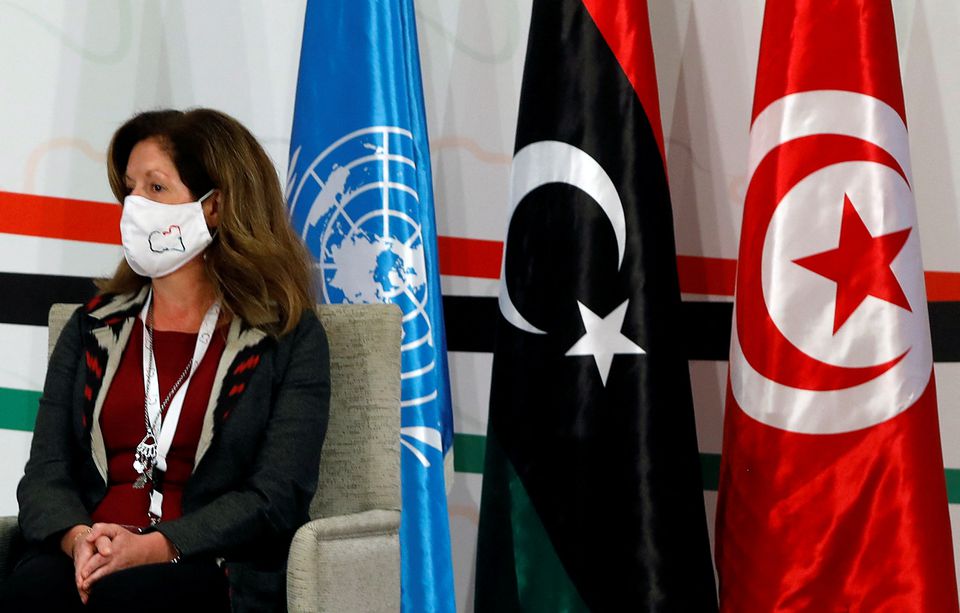
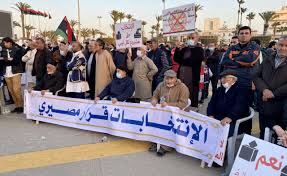
TUNIS, March 9 (Reuters) – A senior United Nations Libya official is seeking agreement this month on election laws and constitutional arrangements, she told Reuters on Wednesday, with rival factions locked in a dangerous stand-off.
Stephanie Williams said she wanted the talks between members of the parliament and High State Council, the country’s two recognised legislative bodies, to take place before Ramadan, which is expected to start on April 1.
Libya faces a political crisis after the parliament last week swore in a new government with the incumbent administration refusing to cede power amid the fallout from a failed attempt to hold national elections in December.
Each rival government has support among the armed factions based in Tripoli, and the parliament-backed prime minister, Fathi Bashagha, has said he intends to take over in the capital this week, raising fears of clashes.
Asked which one the U.N. regarded as valid, Williams said “we’re not in the business of endorsing or recognising governments” and added that she was focused on pushing for an election.
Williams, who was previously the acting U.N. envoy in Libya, was appointed in December as the secretary general’s Libya adviser with a mandate to lead mediation efforts.
Williams said last week she would convene a joint committee with six members each from the parliament and the High State Council.
The two chambers should each submit six names to join the committee “in the next few days”, Williams said.
“We need to get these talks going prior to the month of Ramadan. We’ve set aside two weeks to establish the constitutional basis. We can hopefully also in that period work on the electoral law,” she said.
“That will allow us to put the country on a footing for elections.”
The two chambers’ failure to agree on a constitutional basis for the election, or on an election law, contributed to the collapse of December’s scheduled vote.
The parliament then said in January it no longer recognised the Government of National Unity of Prime Minister Abdulhamid al-Dbeibah, which was installed a year ago through a U.N.-backed peace process.
The parliament instead initiated a new transitional period by forming another interim government, calling for a new constitution to be approved this year and no elections until 2023.
Bashagha’s team has accused Dbeibah of closing down Libyan airspace as part of an effort to resist transferring power. Domestic flights have been grounded for days.
Williams said airspace should be reopened.
“It’s a basic right for people to be able to travel from one part of the country to the other and in fact it’s enshrined in the ceasefire agreement,” she said.
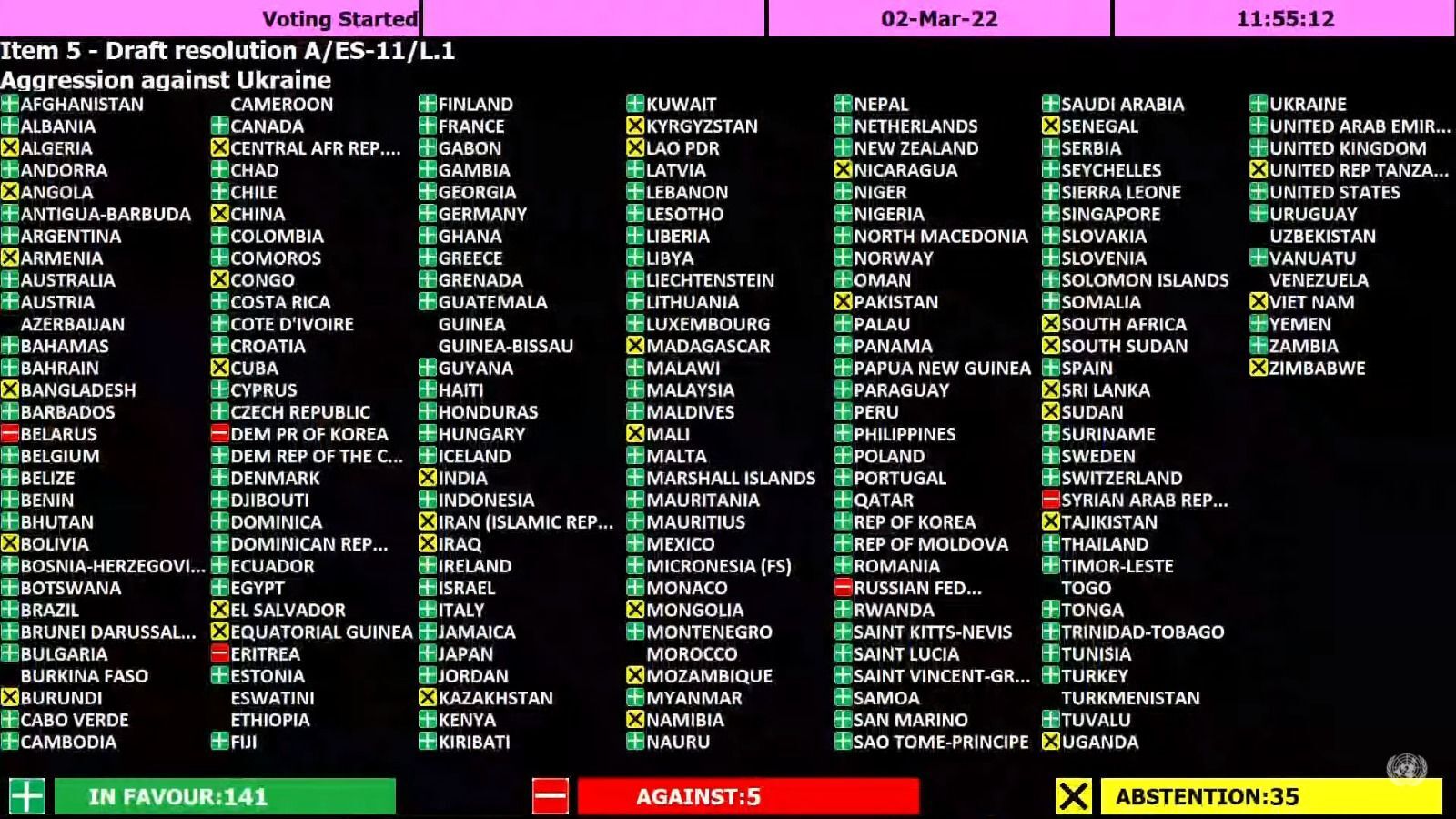
The United Nations General Assembly has overwhelmingly adopted a resolution demanding that Russia end its military operations in Ukraine immediately.
A total of 141 countries voted in favour of the March 2, 2022 resolution, which reaffirms Ukrainian sovereignty, independence and territorial integrity. UN News reports that the resolution demands that Russia “immediately, completely and unconditionally withdraw all of its military forces from the territory of Ukraine within its internationally recognized borders”.
It was sponsored by more than 90 countries and needed a two-thirds majority in the Assembly to pass. Five countries – Belarus, the Democratic People’s Republic of Korea (more commonly known as North Korea) Eritrea, Russia and Syria – voted against it, while 35 abstained.
According to Wikipedia, these African countries supported the resolution:
Benin, Botswana, Cape Verde, Chad, Comoros, Côte d’Ivoire, Democratic Republic of the Congo, Djibouti, Egypt, Gabon, Gambia, Ghana, Kenya, Lesotho, Liberia, Libya, Malawi, Mauritania, Mauritius, Niger, Nigeria, Rwanda, Seychelles, Sierra Leone, Somalia, Tunisia, Zambia.
These were the African countries which abstained:
Algeria, Angola, Burundi, Central African Republic, Congo, Equatorial Guinea, Madagascar, Mali, Mozambique, Namibia, Senegal, South Africa, South Sudan, Sudan, Tanzania, Uganda, Zimbabwe.
Burkina Faso, Cameroon, Ethiopia, Eswatini, Guinea, Guinea-Bissau, Morocco and Togo were absent.
In the BRICS alliance, Russia voted against the resolution, India, China and South Africa abstained but Brazil voted for it.
(Reuters) – The United Nations Libya adviser Stephanie Williams said on Friday she had invited the parliament and High State Council to each nominate six members for a joint committee on Libya’s constitutional arrangements.
Libya’s political process fell apart in December with the collapse of a scheduled election, with major factions and political bodies pushing opposing plans for the path ahead and backing rival governments.
On Thursday the parliament based in Tobruk in eastern Libya swore in Fathi Bashagha as prime minister but the incumbent Abdulhamid al-Dbeibah in Tripoli, in the west, has refused to cede power risking a new conflict or territorial division.
The parliament in January approved its own political roadmap that involved putting an amended constitution to a referendum this year followed by elections next year.
Williams also urged factions to preserve security and stability and avoid escalation, adding “the solution to Libya’s crisis does not lie in forming rival administrations and perennial transitions”.
The parliament, which was elected in 2014, is recognised internationally through a 2015 political agreement that also recognised the High State Council as a legislative chamber formed from members of a previous parliament.
lthough the High State Council initially appeared to agree the parliament’s constitutional plans and its installation of Bashagha’s government, it later rejected both.
Rival factions dispute the legitimacy of all the political bodies, including both the parliament and High State Council, and both Bashagha’s government and the Dbeibah administration which was installed a year ago through a U.N.-backed process.
BAMAKO, March 4 (Reuters) – The United Nations peacekeeping mission in Mali said on Friday it was investigating allegations that dozens of people were massacred in the centre of the country.
A video circulating on social media since Thursday shows dozens of badly-burned bodies with their eyes blindfolded and their hands bound together. Some of them appear to have holes in the back of their heads.
An official in central Mali, who asked not to be named, said the video shows the bodies of 35 men that were found on Tuesday night in the rural commune of Diabaly, an area where Islamist militants have been battling Malian soldiers.
The official said there were no eyewitnesses to the men’s deaths but that they are believed to be people who were arrested by the Malian army, some on Feb. 20 and others on March 1.
A senior Malian military officer, also speaking on condition of anonymity, said the video was filmed in Diabaly but that the circumstances of the deaths were not yet clear.
Olivier Salgado, spokesman for the U.N. peacekeeping mission in Mali, said the mission’s human rights division was investigating the deaths.
“We are concerned about these allegations and information, as well as these horrible images of people killed in circumstances that are not yet clear,” he told Reuters.
Mali’s military spokesperson did not respond to a request for comment.
The U.N. has repeatedly accused Malian soldiers of summarily executing civilians and suspected militants over the course of their decade-long fight against groups linked to al Qaeda and Islamic State.