


 موقع وجه أفريقيا موقع وجه أفريقيا هو موقع مهتم بمتابعة التطورات في القارة الأفريقية
Related Articles


Wagdy Abdelaziz
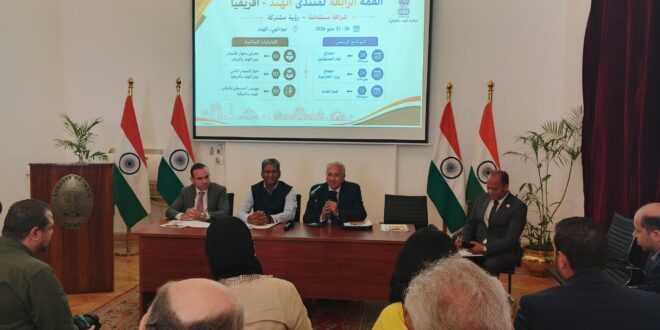
The Indian Embassy in Cairo organized a press conference to announce the start of the fourth session of the India-Africa Forum Summit, which will take place from May 28 to 31, 2026. The conference was attended by the Indian Ambassador to Cairo, Suresh K. Reddy, Ambassador Mohamed Hegazy, the former Egyptian Ambassador to India, and Engineer Mohamed Basha, Chairman of the Egyptian Young Businessmen Association.
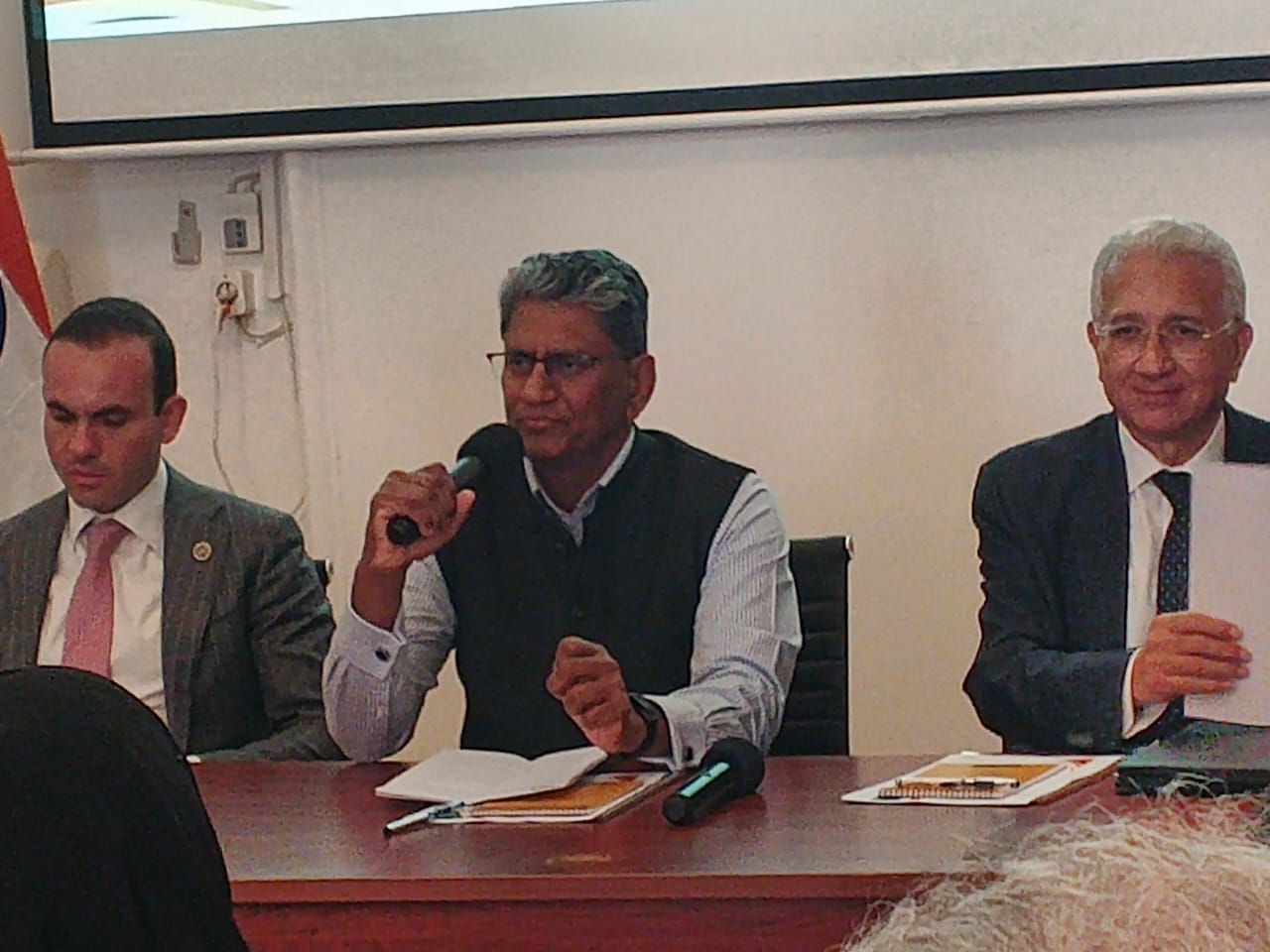
India is set to host leaders of all African countries and their representatives will mark a new chapter in one of the most enduring, historical and dynamic partnerships in the Global South. The theme of this summit is “IA SPIRIT: India Africa Strategic Partnership for Innovation, Resilience, and Inclusive Transformation”. This Summit will witness a series of preparatory meetings, including the India-Africa Foreign Ministers’ Meeting on 29 May, preceded by Senior Officials Meeting on 28 May, which will deliberate on key areas of cooperation between India and Africa. Further, India – Business Dialogue and Exhibition, India- Africa Music and Dance festival, Track 2 dialogue, will be held on the side lines.
India-Africa Partnership is built on decades of solidarity, shared struggles, mutual developmental partnerships and cooperation. India’s engagement with Africa is guided by the principles listed by Prime Minister Narendra Modi in Uganda in 2018. These are rooted in equality, mutual respect, shared vision and progress. Egypt is India’s important partner in Africa and acts as “The Gateway to Africa”. Robust India-Egypt ties across trade, investment, capacity building and technology advance India – Africa solidarity and cooperation.
Over the past decade, India–Africa ties have reached new heights. Under India’s G20 Presidency (2023), the African Union became a permanent member of G20, while three editions of the Voice of Global South Summits amplified Africa’s global voice. India expanded its diplomatic footprint by opening 17 new missions in recent years, taking its presence from 29 to 46 in Africa while African countries similarly increased their resident missions in India to 45. India is Africa’s 3rd largest trading partner, with bilateral trade at USD 82 billion in 2024–25 (exports: USD 42.6 billion; imports: USD 39.2 billion), a 17% YoY increase driven by petroleum products, pharmaceuticals, automobiles, chemicals, and fertilizers.
India is also among the top five investors in Africa, with cumulative investments of USD 80 billion across mining, oil & gas, renewable energy, agriculture, and manufacturing. The Duty Free Tariff Preference (DFTP) Scheme provides duty-free access to 98.2% of tariff lines for 33 African nations. As a development partner, India has extended over USD 10 billion through 190 Lines of Credit to 41 African countries and USD 700 million in grant assistance. Over 42,000 African students have studied in India under various scholarships and the India–Africa Maitri (Friendship) Scheme, while 37,000 professionals have been trained under Indian Technical and Economic Cooperation (ITEC). In the area of sustainability, 39 African countries have joined the International Solar Alliance (ISA), 9 in the Coalition for Disaster Resilient Infrastructure (CDRI), 11 in the Global Biofuels Alliance (GBA), and 9 in the International Big Cat Alliance (IBCA), strengthening cooperation in clean energy, resilience, and conservation.
The India–Africa Forum Summit (IAFS), launched in 2008, is the main platform for cooperation across political, economic, and development domains. The Delhi Declaration (2008) laid the foundation based on equality, capacity building, and concessional Lines of Credit, along with calls for global governance reform. The Addis Ababa Declaration (2011) shifted focus to implementation, aligning with Africa’s priorities and committing USD 5 billion in Lines of Credit, while expanding cooperation in infrastructure, health, education, agriculture, and ICT.
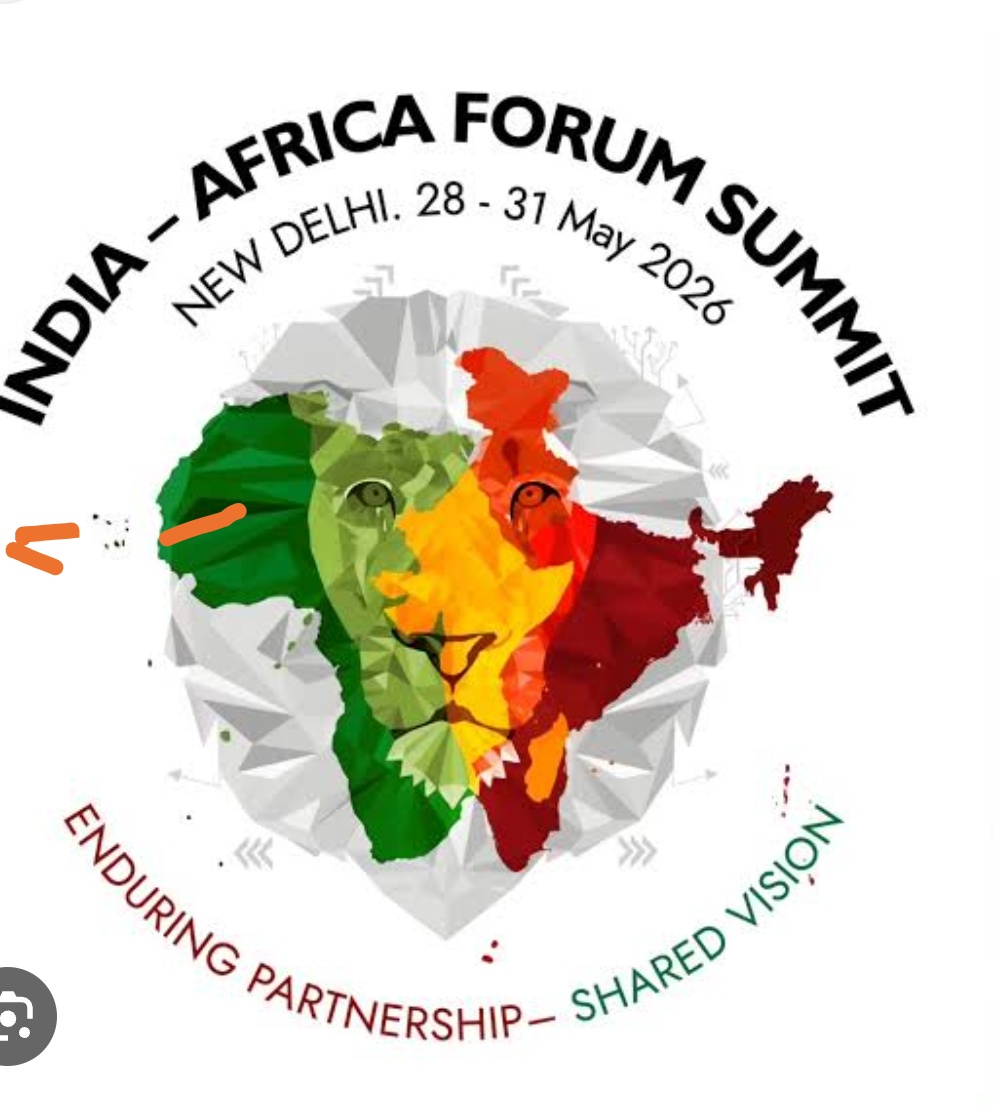
The 3rd IAFS (New Delhi, 2015) was a turning point with participation from all 54 African countries and 40+ Heads of State/Government. It adopted the Delhi Declaration 2015 and India–Africa Framework for Strategic Cooperation (2015–2025), announcing USD 10 billion in Lines of Credit, USD 600 million in grants, 50,000 scholarships, and expanded ITEC training. It broadened cooperation across key sectors and consolidated India–Africa ties into a comprehensive strategic partnership.
In recent years, India has advanced in frontier technologies—from space missions like Chandrayaan-3 and Aditya-L1 to AI and digital public infrastructure, and the National Quantum Mission – demonstrating affordable and scalable innovation. With Africa facing similar challenges in infrastructure, financial inclusion, and access to healthcare and education, India’s technology-driven solutions offer a practical model for inclusive and sustainable development, making them a key pillar of India–Africa cooperation.
The forthcoming 4th India – Africa Forum Summit represents a renewed commitment to a shared future of prosperity, innovation, and resilience and provides a structured platform to translate political intent into actionable frameworks. India-Africa economic cooperation is expected to become stronger in fintech, ICT, digital economy, renewable energy & e-mobility, pharmaceuticals & healthcare, agro-processing & agriculture, critical minerals & manufacturing.
As India and Africa deepen their partnership, Egypt stands at the heart of this evolving relationship, bridging regions and enabling new pathways for economic and strategic cooperation. Together, India and Africa are not just partners but they are co-architects of a more inclusive and balanced global order
