


 موقع وجه أفريقيا موقع وجه أفريقيا هو موقع مهتم بمتابعة التطورات في القارة الأفريقية
Related Articles


Sahar Ragab
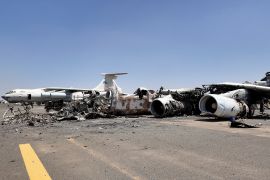
International and regional condemnation is mounting following the drone attack targeting Khartoum International Airport, in a dangerous escalation that threatens to worsen the humanitarian crisis and complicate prospects for a political settlement in Sudan.
In this context, Massad Boulos, a senior adviser to the U.S. president, strongly condemned the attack, stressing Washington’s rejection of any targeting of civilian infrastructure, particularly airports that serve as vital hubs for humanitarian aid and the movement of relief personnel.
He emphasized that such attacks disrupt aid delivery and further complicate humanitarian response efforts, urging all warring parties to immediately halt hostilities and accept humanitarian arrangements that would allow the safe passage of essential supplies. He also noted that a ceasefire should be the first step toward a comprehensive political settlement leading to the formation of a civilian government.
International Reactions:
Condemnations have extended beyond the United States, with humanitarian organizations and regional actors increasingly calling for the protection of civilian infrastructure, amid fears of a near-collapse of essential services across the country.
The strike is widely viewed as a violation of international humanitarian law, which prohibits targeting civilian facilities, especially those linked to relief operations.
Possible (Objectives) of the Strike:
Disrupt supply lines by targeting a key logistical hub.
Apply military and psychological pressure on the opposing side.
Undermine control over the capital and its strategic facilities.
Weaken the opponent’s political legitimacy internationally.
Military Analysis:
The use of drones reflects a shift in warfare tactics within Sudan, highlighting the growing reliance on low-cost, high-impact technologies to strike critical infrastructure.
Targeting Khartoum Airport indicates a calculated move toward high-value assets, as the airport serves as a central logistical gateway not only for civilian transport but also for international humanitarian aid.
From a military perspective, such operations fall ضمن what is often described as “smart attrition warfare,” aimed at gradually weakening the opponent without engaging in large-scale direct confrontation.
Humanitarian Impact:
Reduced access to medical and food assistance.
Increased difficulty in evacuating the wounded and aid workers.
Worsening conditions for civilians in conflict zones.
The strike on Khartoum Airport signals a more dangerous phase in Sudan’s conflict, where critical infrastructure is increasingly becoming a target. This escalation risks deepening the humanitarian crisis and prolonging the conflict, as international warnings grow over the potential for systemic collapse if tensions are not urgently contained.
